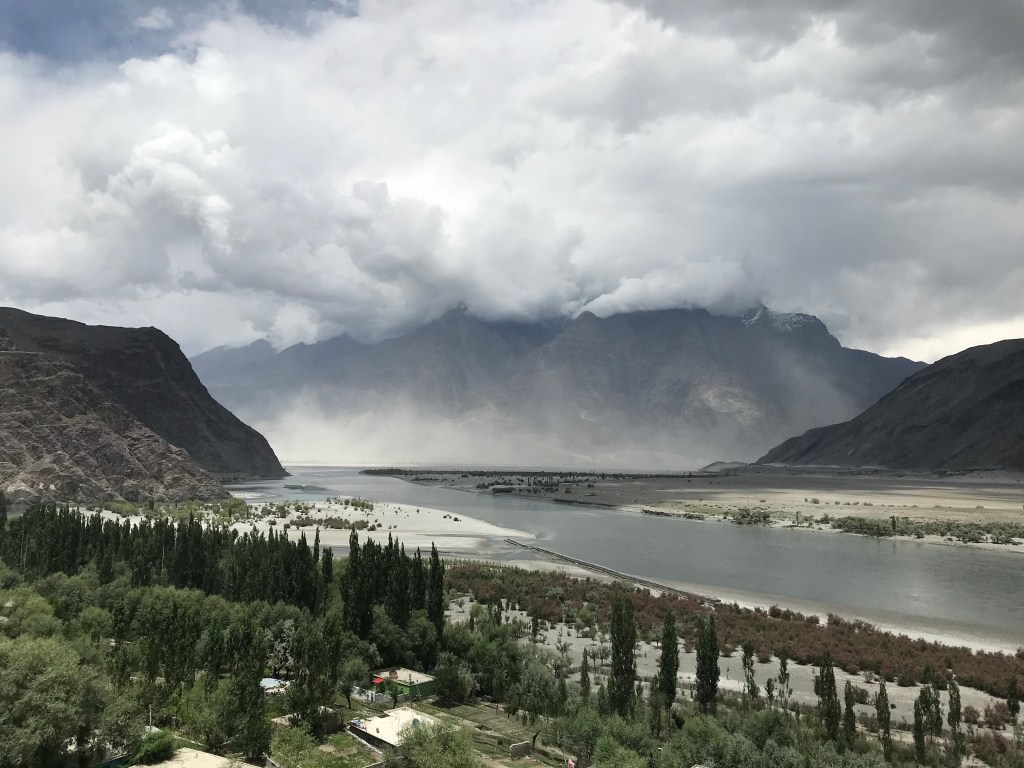
The distance from Gilgit to Skardu is approximately 120 miles, but dependent on road conditions, which are constantly fluctuating, the drive can take anywhere from 10 to 14 hours. Being so, we left Gilgit in the early morning hours to hit the road. The narrow, winding, paved road was constructed by the Pakistan Army Engineers in conjunction with the Chinese. It follows along the mighty Indus River, one of the longest rivers in Asia, flowing through Western China (Tibet), Northern India (Ladakh), and south along the entire length of Pakistan to merge into the Arabian Sea near the port city of Karachi.
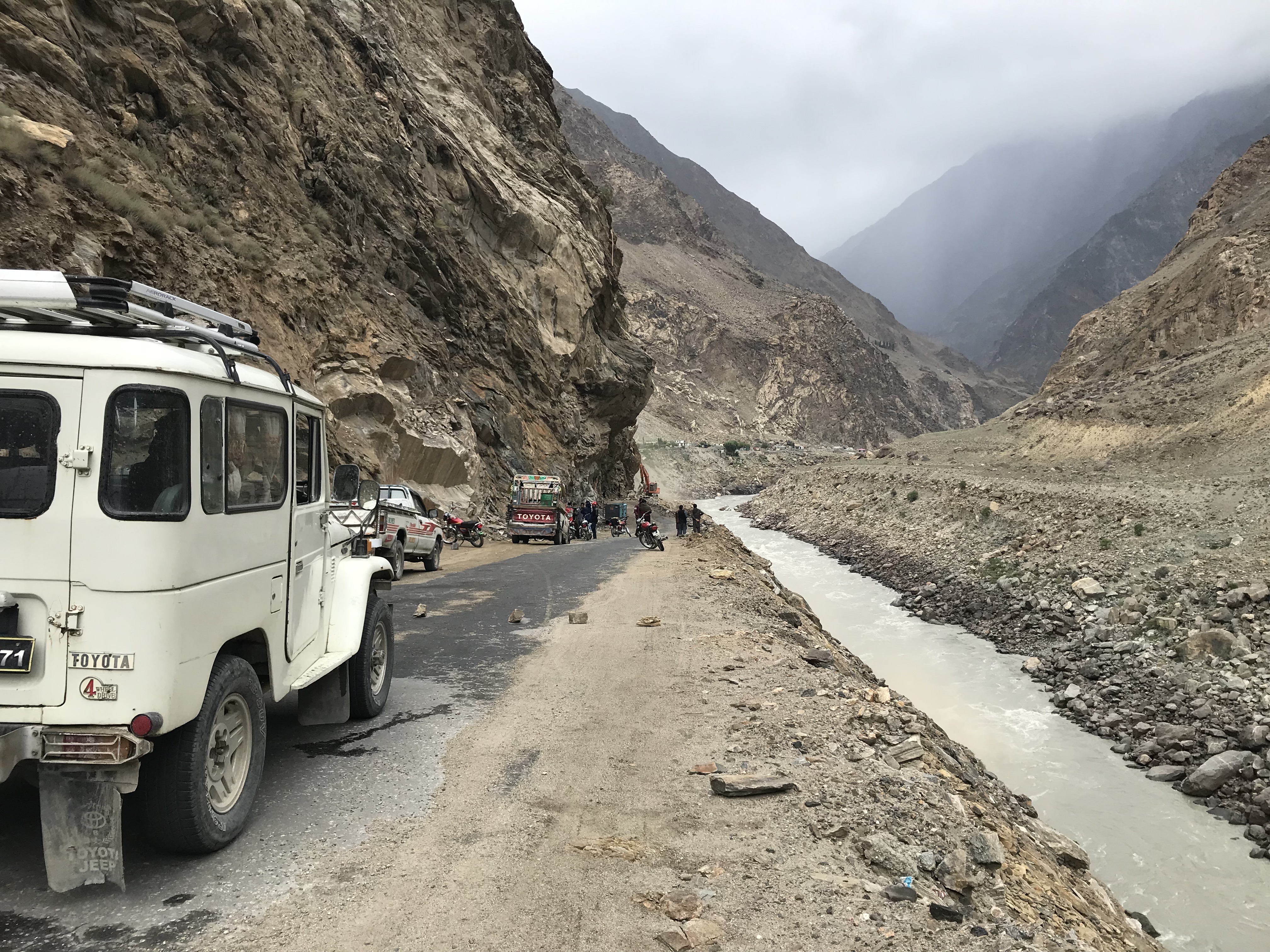
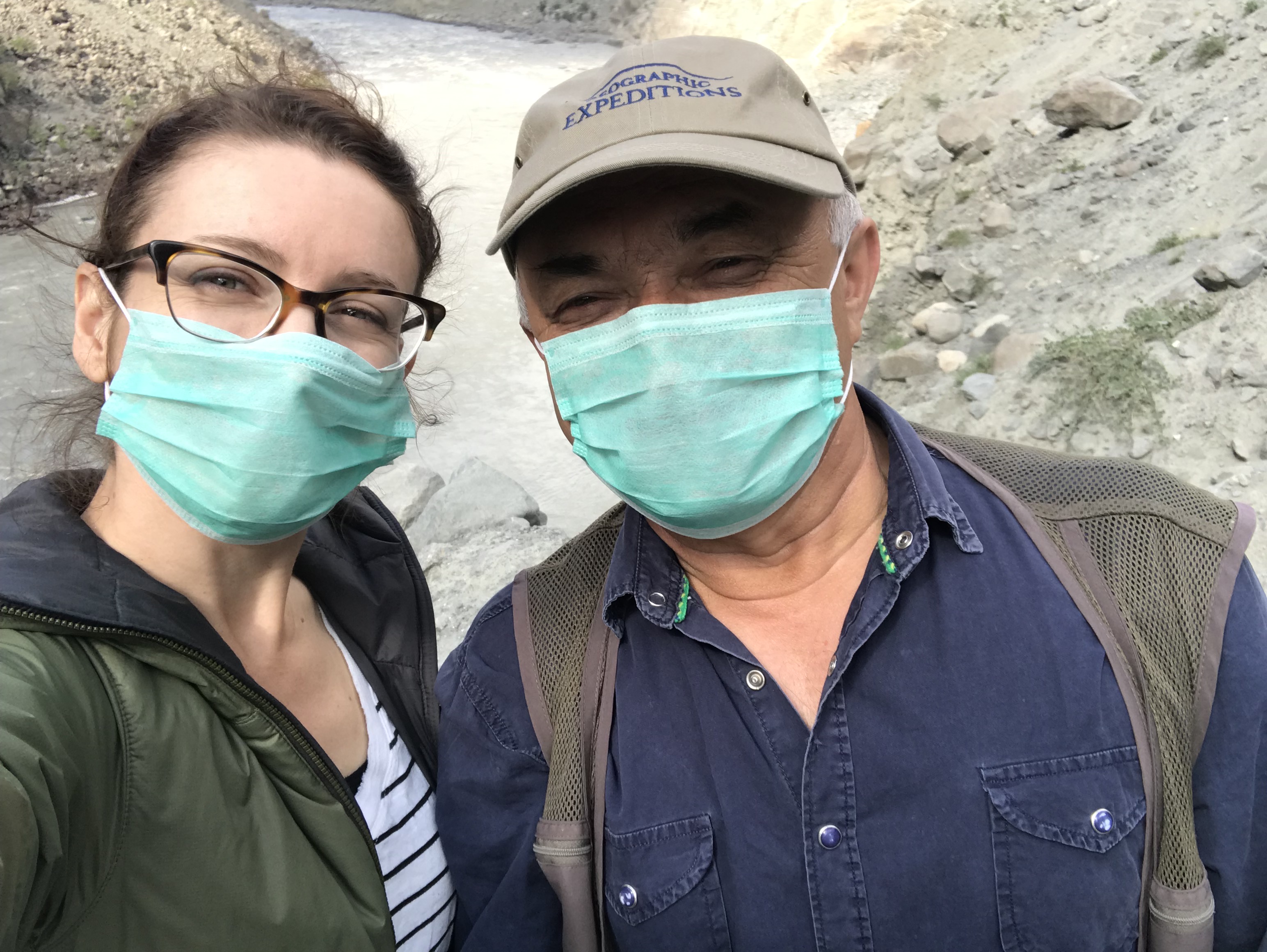
Less than an hour into our journey, we encountered a roadblock due to construction widening the road. The workers stopped all vehicles, as dynamite was being used to break cliff-side rocks. We were able to get out and watch the show, face masks included, to avoid inhaling the dust and debris.
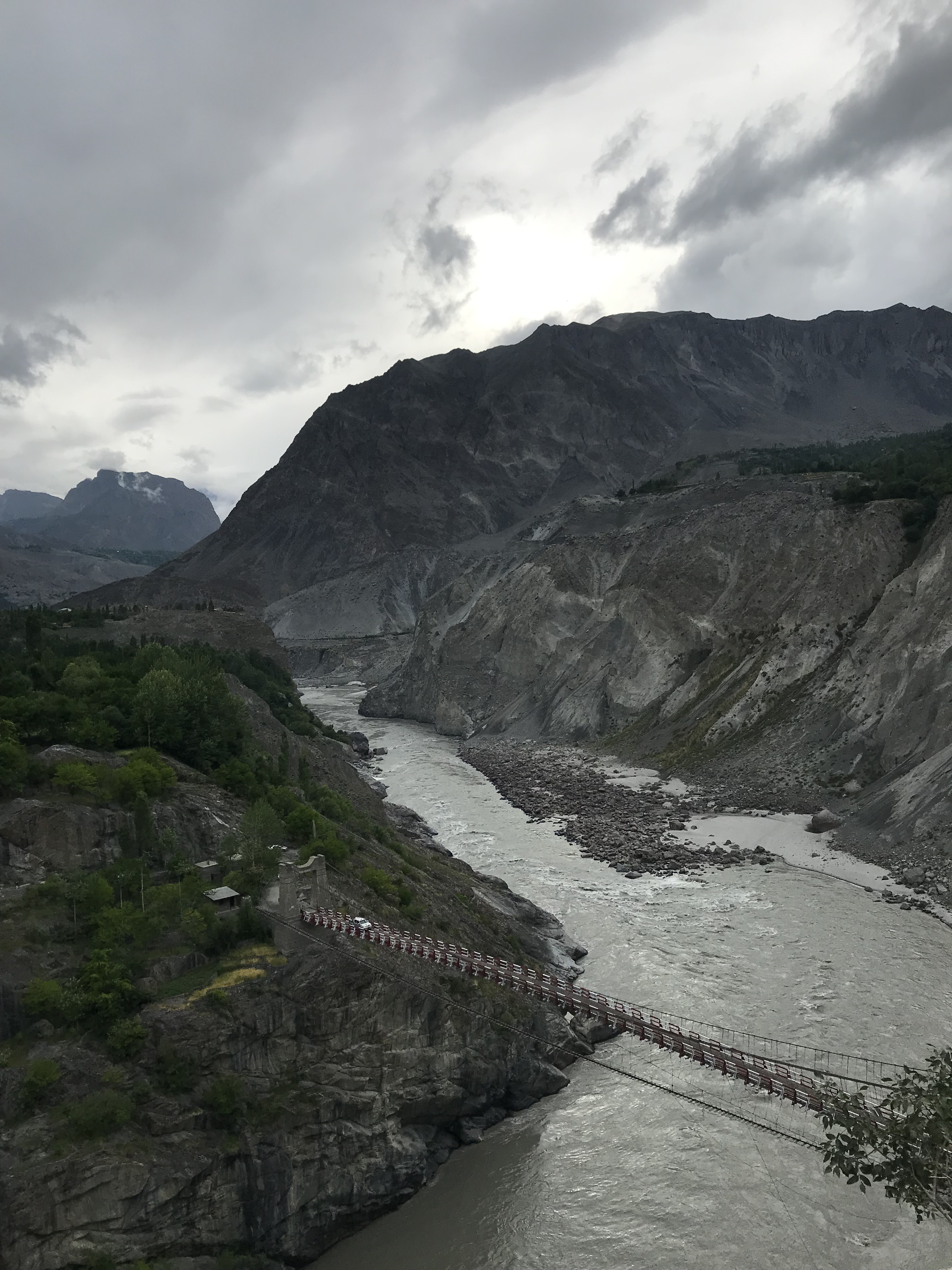
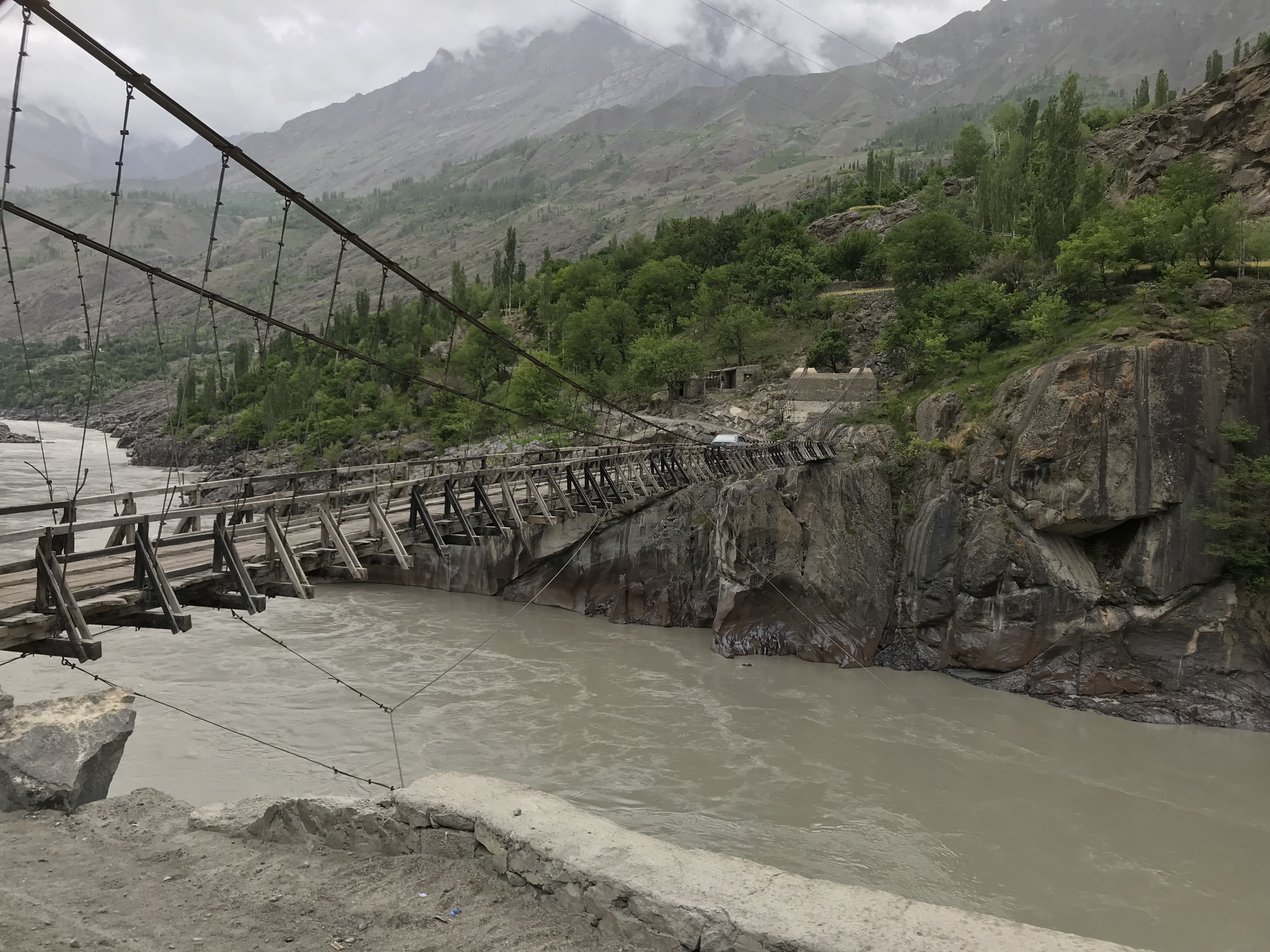
Once able to roll again, the dramatic views of jagged peaks lining the rushing river, was the best distraction from how bumpy and windy the road became. The occasional village, with terraced crops, would appear on the other side of the river, looking so beautifully surreal. The road itself was also endlessly entertaining, cutting through the mountain so that the vehicle was almost completely surrounded by rock at times. We crossed numerous suspension bridges, all with their own excitement. Some slightly swaying as we slowly drove over, and some heavily used by children walking to and from school.
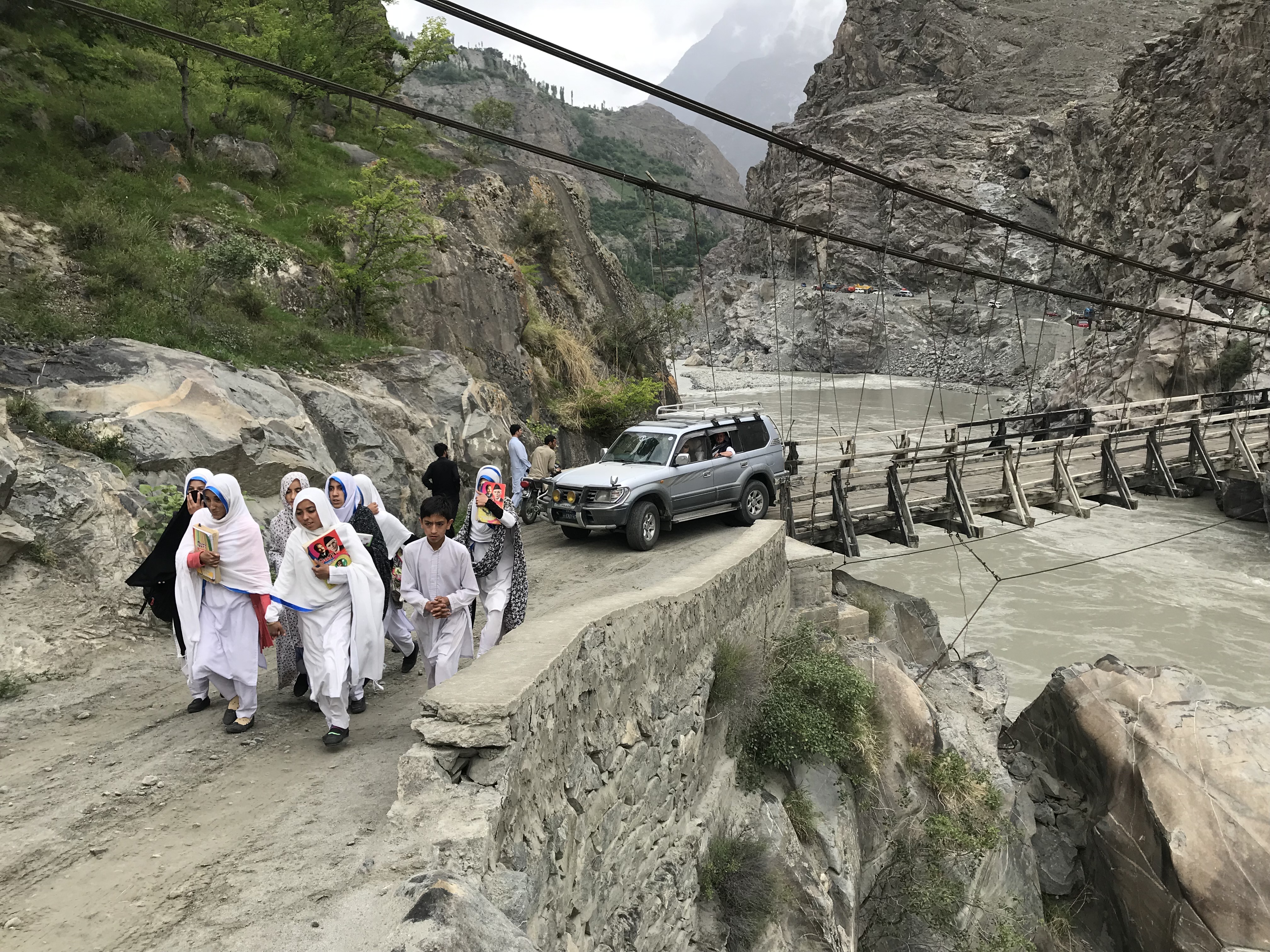
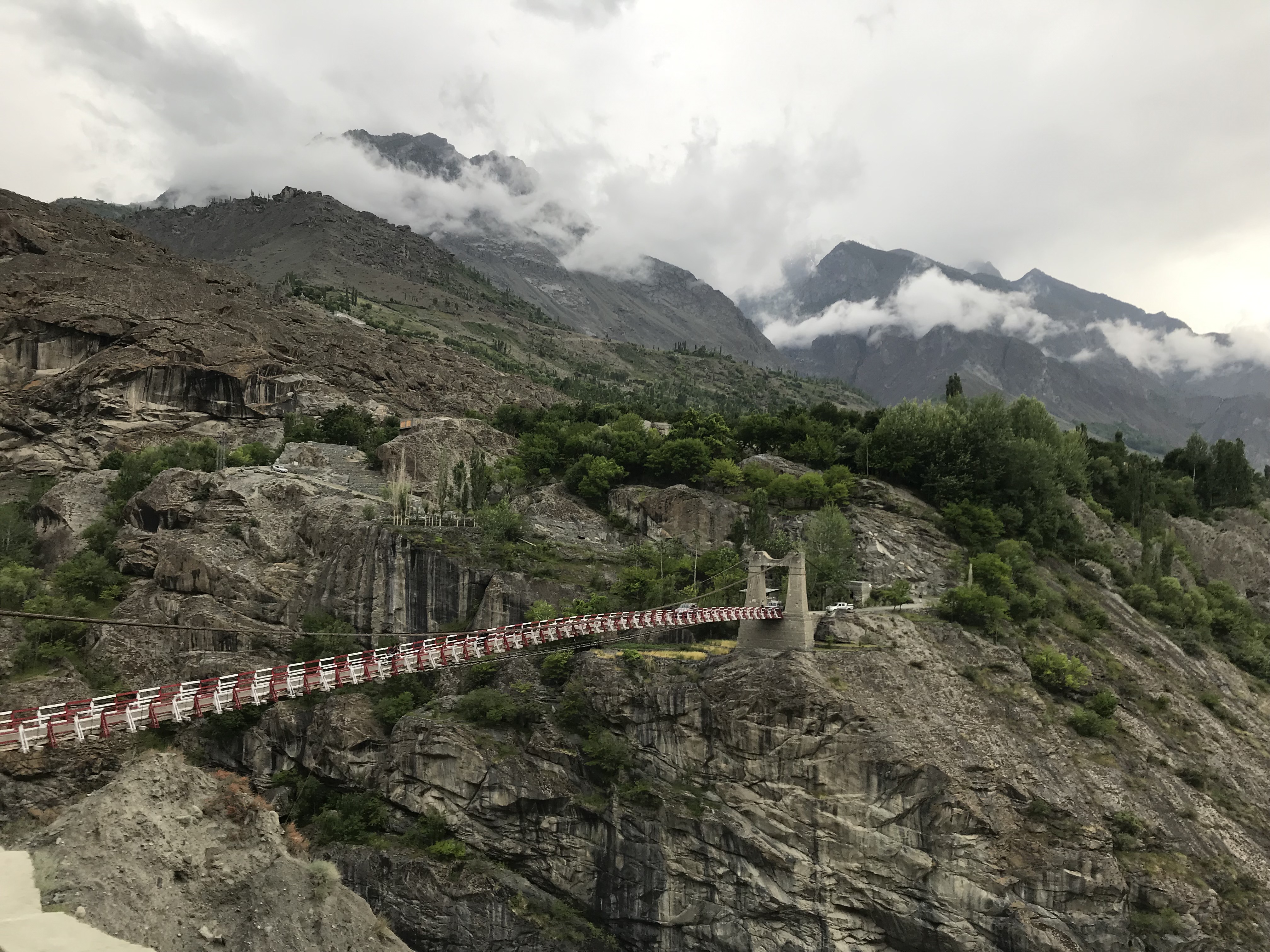
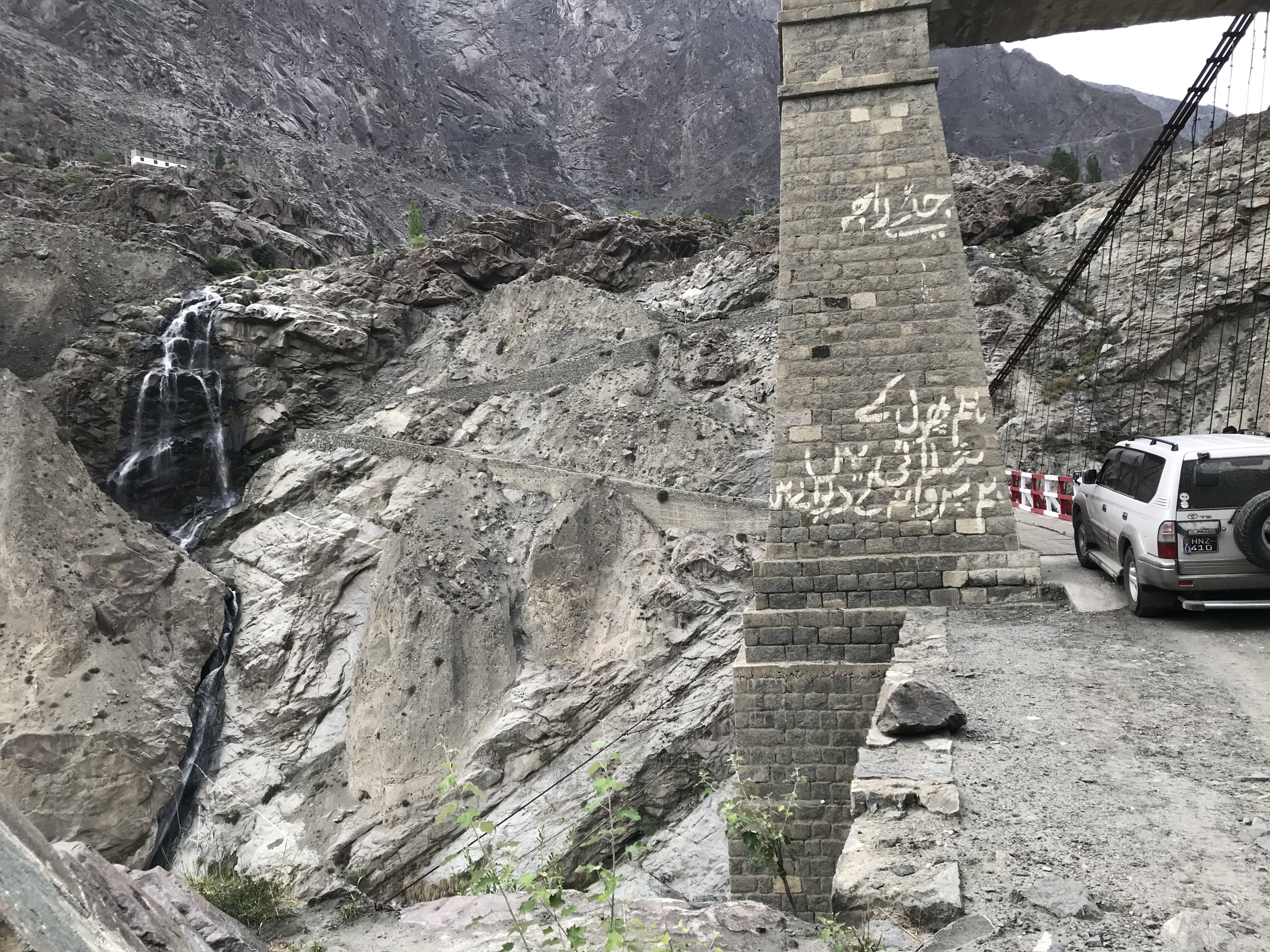
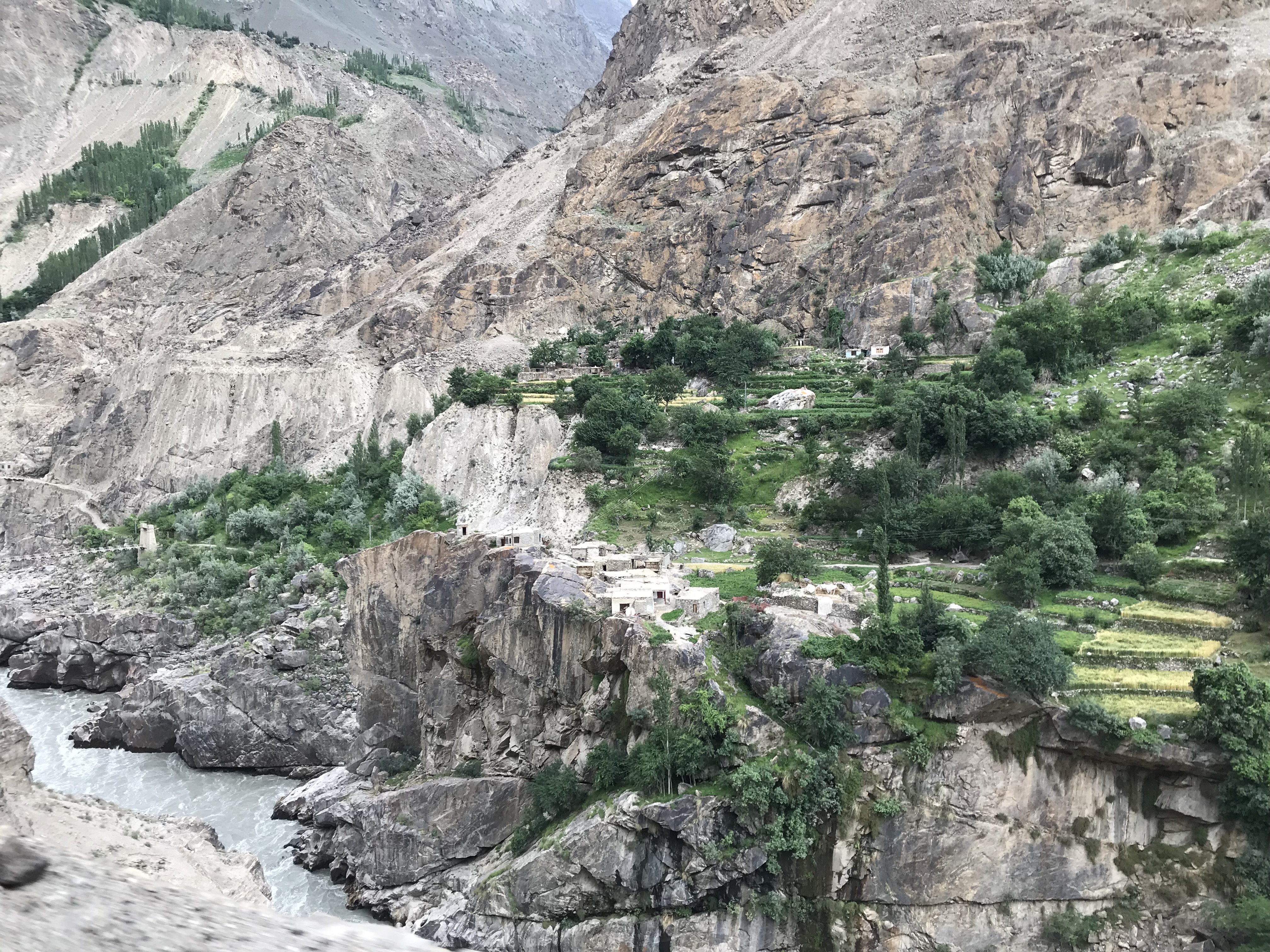
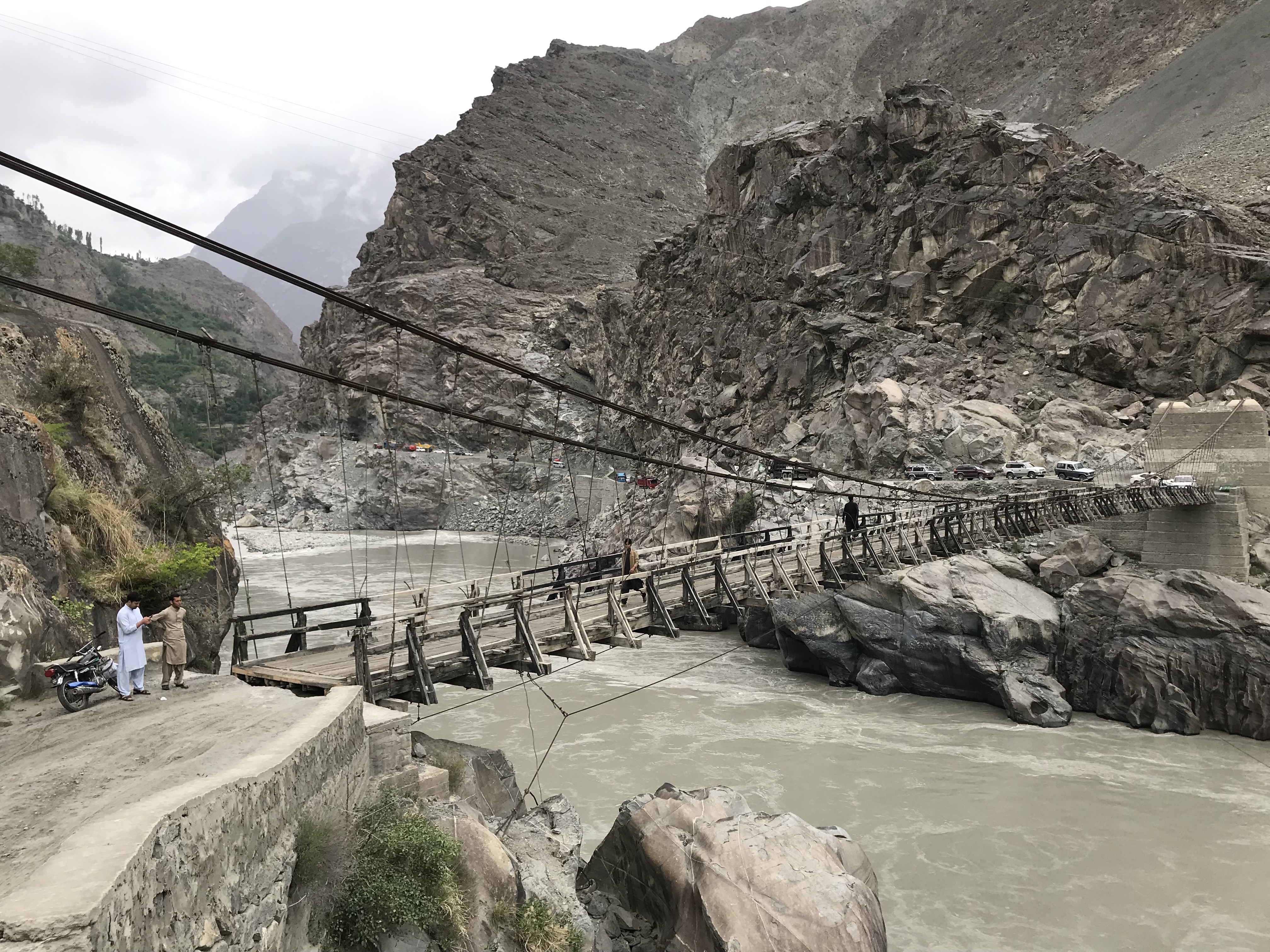
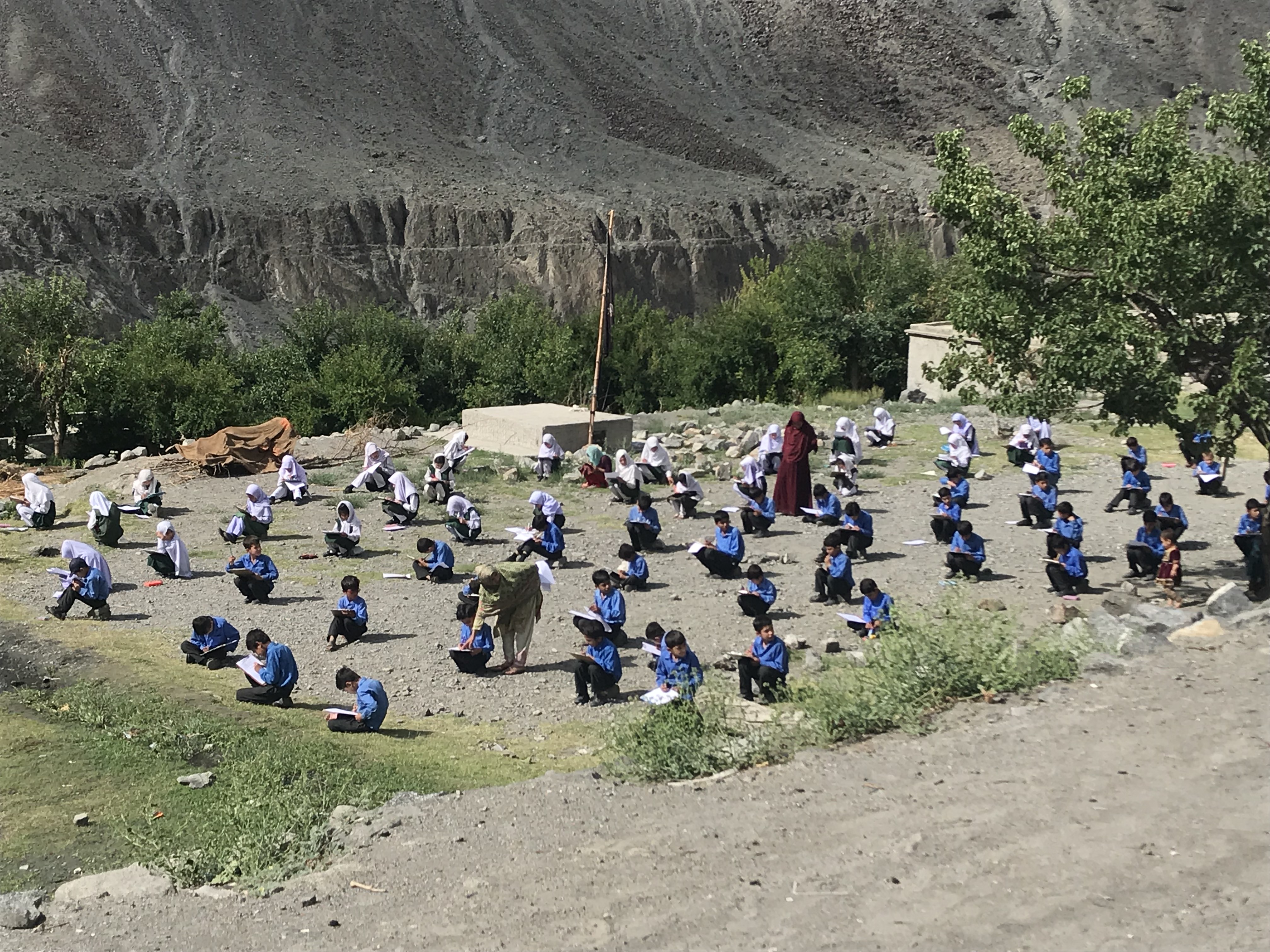
Our drive continued, and as proven to us from previous drive days, detours were necessary. Also known by now, detours lead to even more interesting experiences. We were lucky enough to come across an outdoor elementary school in session. Young students in uniform, sitting patiently, as their teachers gave instruction. It was a precious sight to behold.
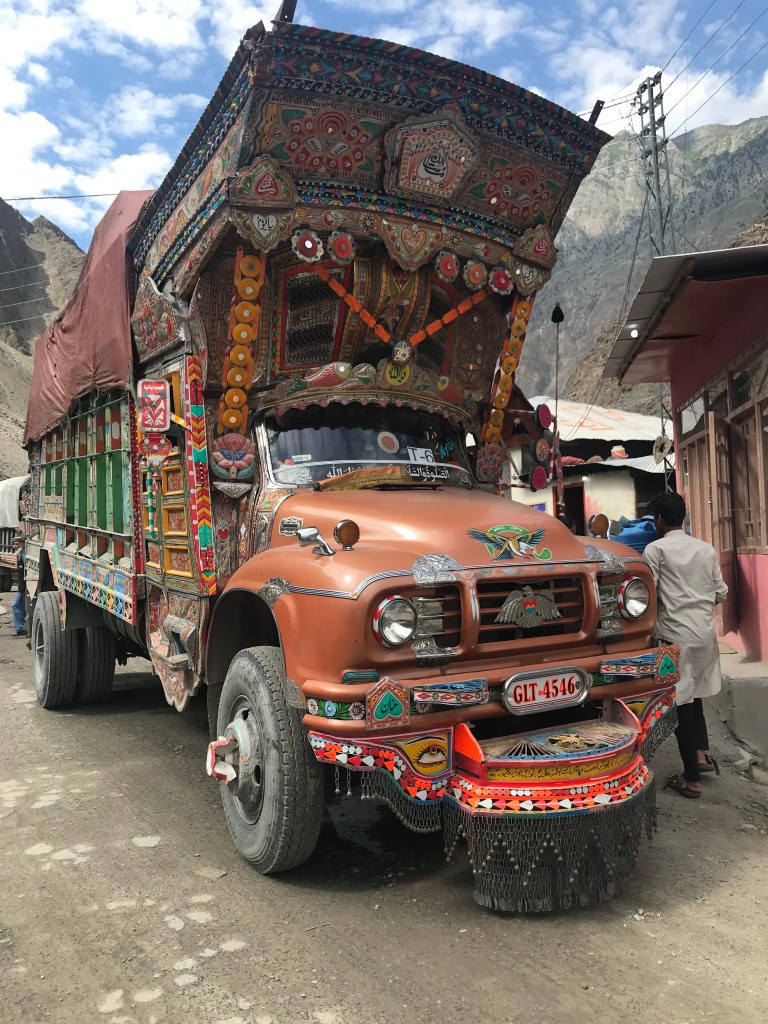
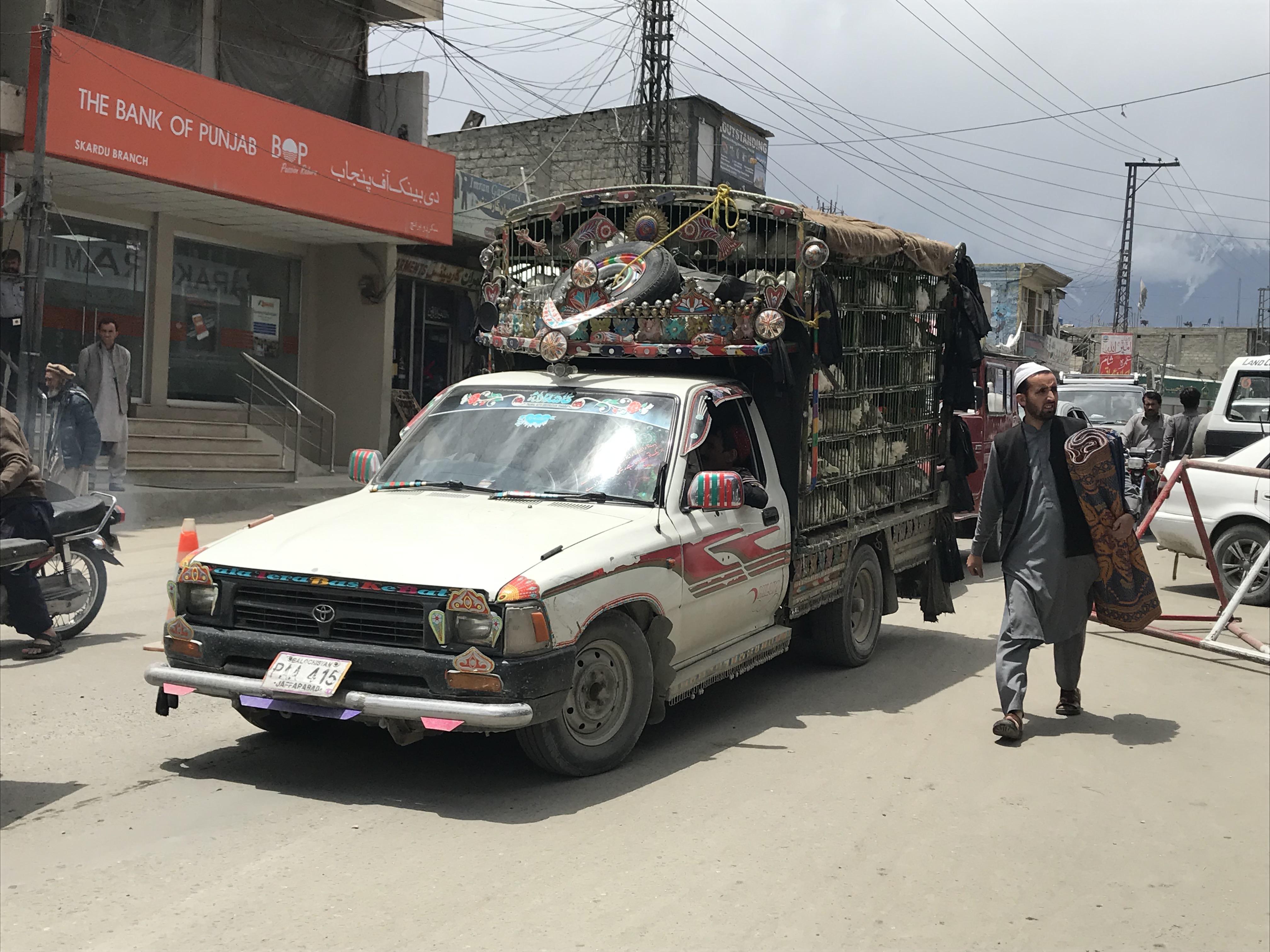
We started to see more of the infamous “jingle trucks” as well. Elaborately decorated trucks, specifically designed by their owner, usually with bells lining the bottom (hence the name). It’s believed, the more flamboyant the design, the better business will become. Being so, there’s an entire industry dedicated to the craft – workshops in Karachi alone employ approximately 50,000 people! Truck drivers are often willing to spend more than a year’s salary to ensure their truck is extra flashy. It was always a thrill passing by the many jingle trucks, as they all vary, and the drivers were visibly excited to share their pride and joy.
It was dark by the time we reached the Shangrila Resort Hotel in Skardu. Our drive, with various short stops (roadblocks, lunch, restroom breaks, snacks, etc.), ended up taking about 11 hours, possibly 12. Thanks to the endless and interesting entertainment throughout the day, not a single person complained (luckily the vehicles were rather comfortable, as well).
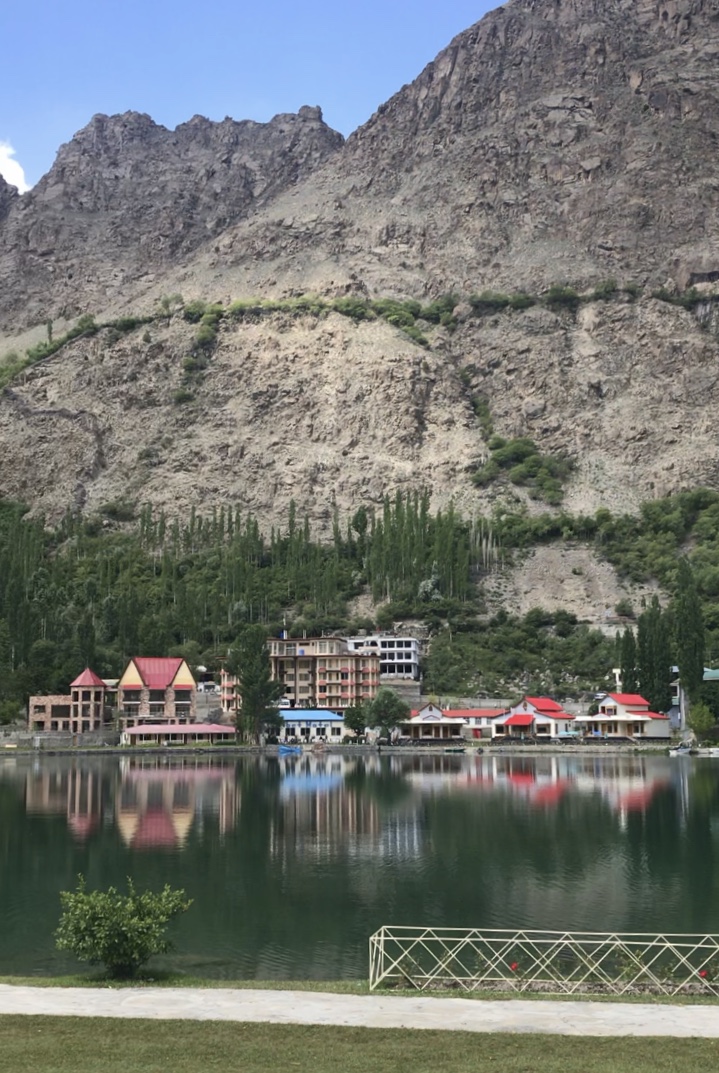
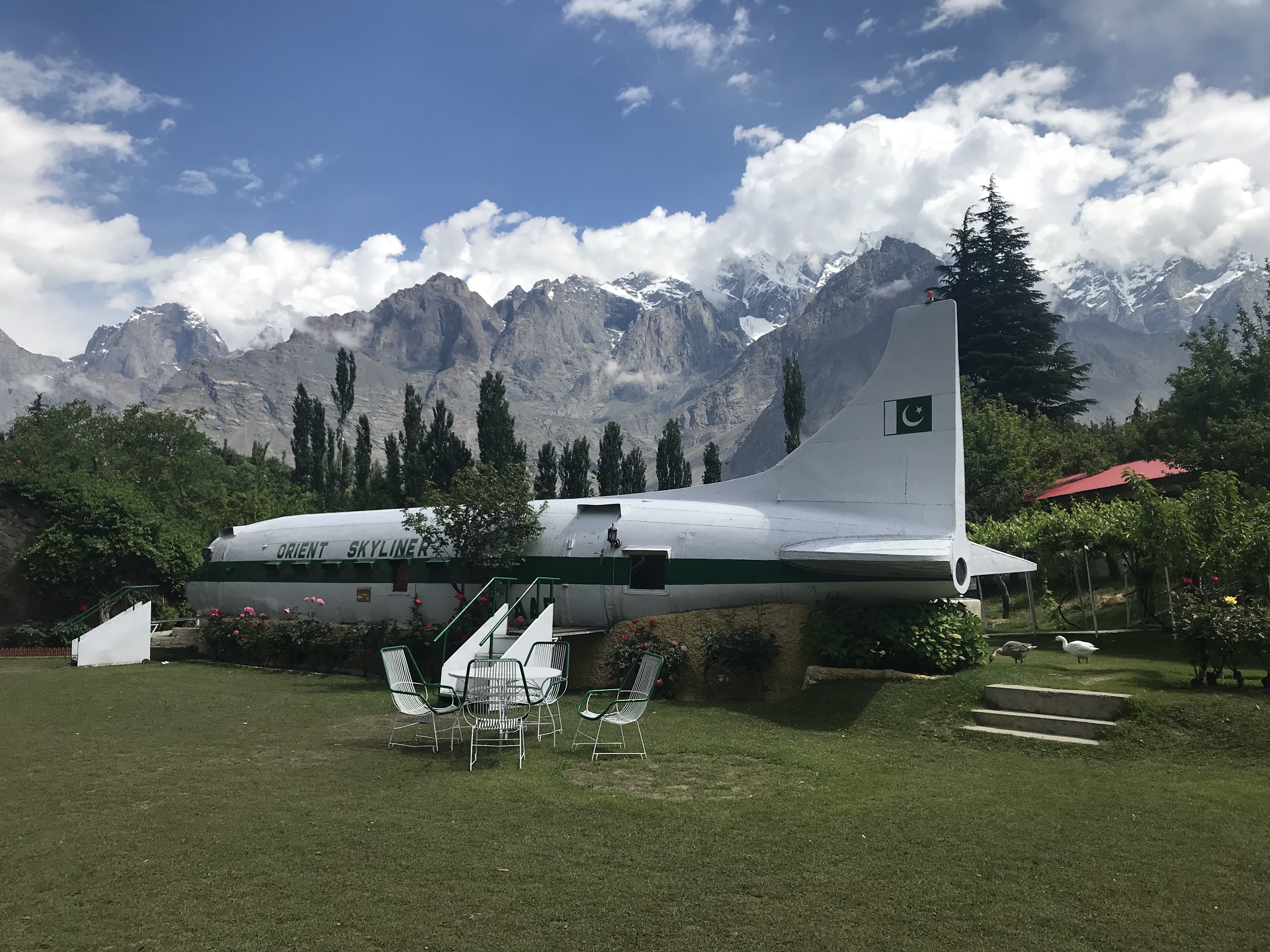
It was a delight waking up to the Shangrila Resort’s lovely setting. The coffee in Pakistan is almost always instant (not great), but I thoroughly enjoyed a cup sitting by the resort’s heart-shaped lake, surrounded by more glorious mountain peaks. In the courtyard is a retired Orient Airways Douglas DC-3 (AP-AAF) plane, now used as a cafe (that was sadly closed during our stay). In October of 1953, the plane took off from the Skardu airport, but just three minutes into the flight, the crew had to make a forced landing in the Indus River bed due to engine failure. All passengers and crew survived, but the plane was deemed unusable and left where it crashed. In 1983, it was purchased by the resort for 150 Pakistan rupees, and now welcomes tourists as a coffee and tea shop!
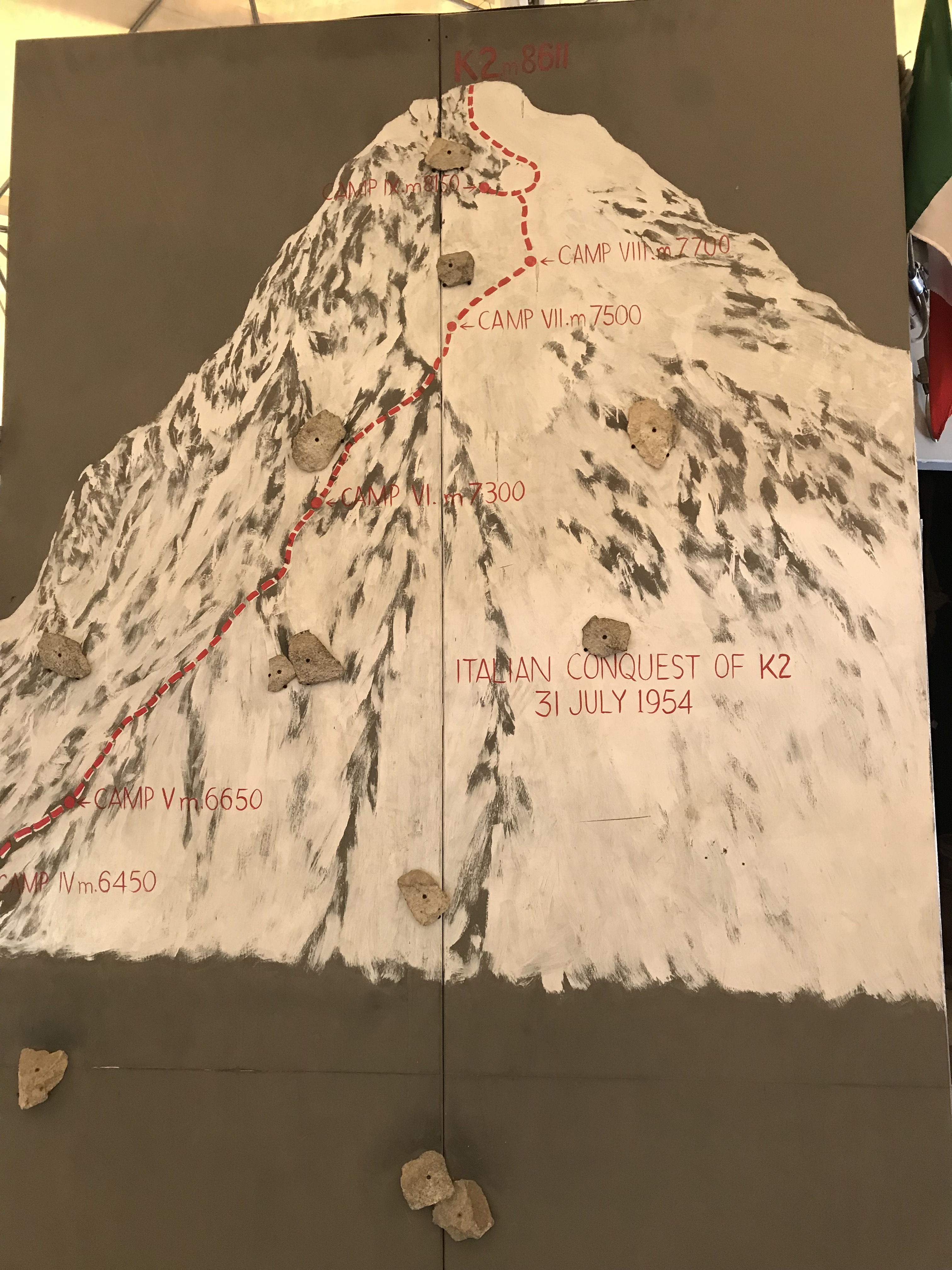
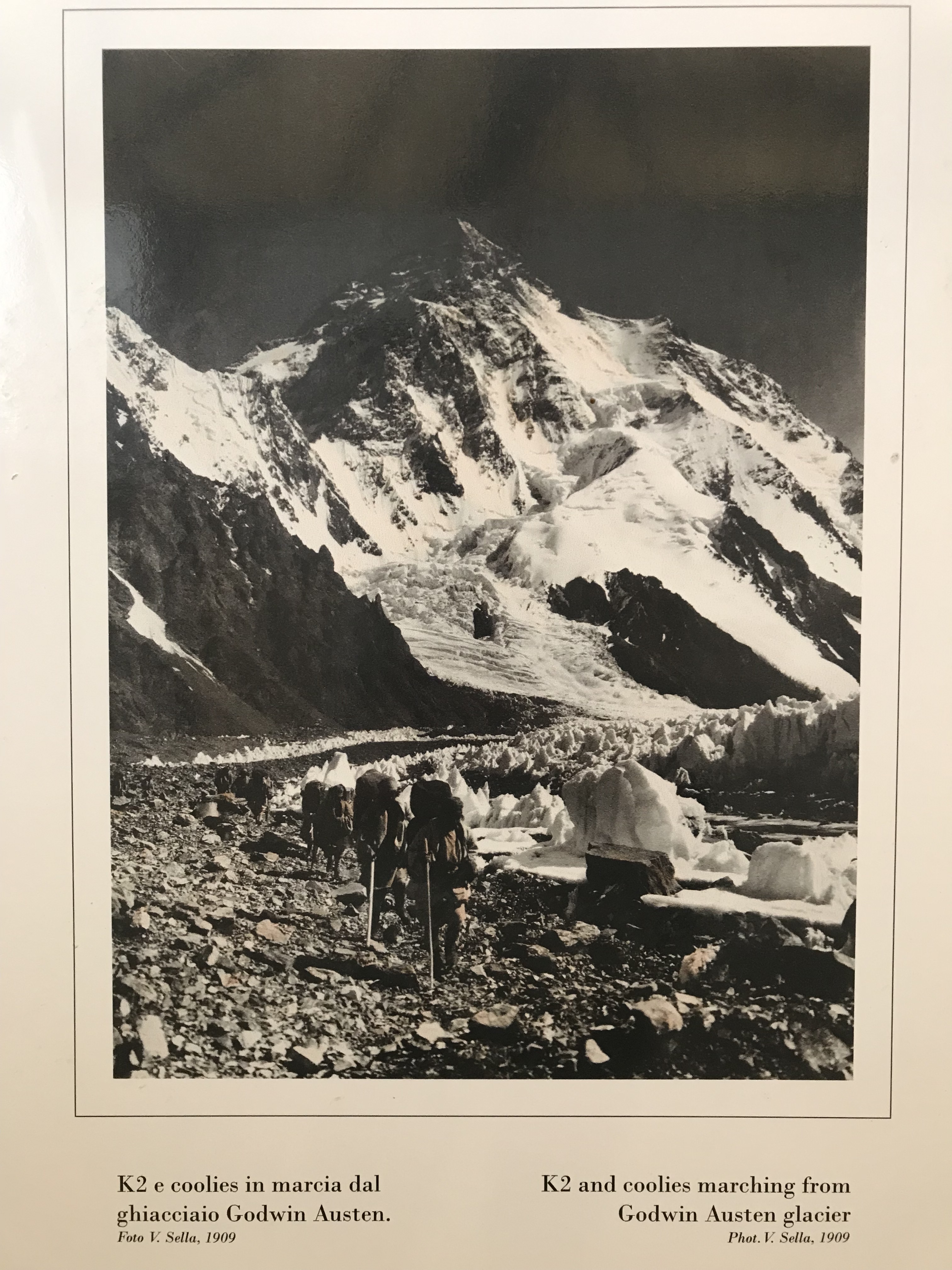
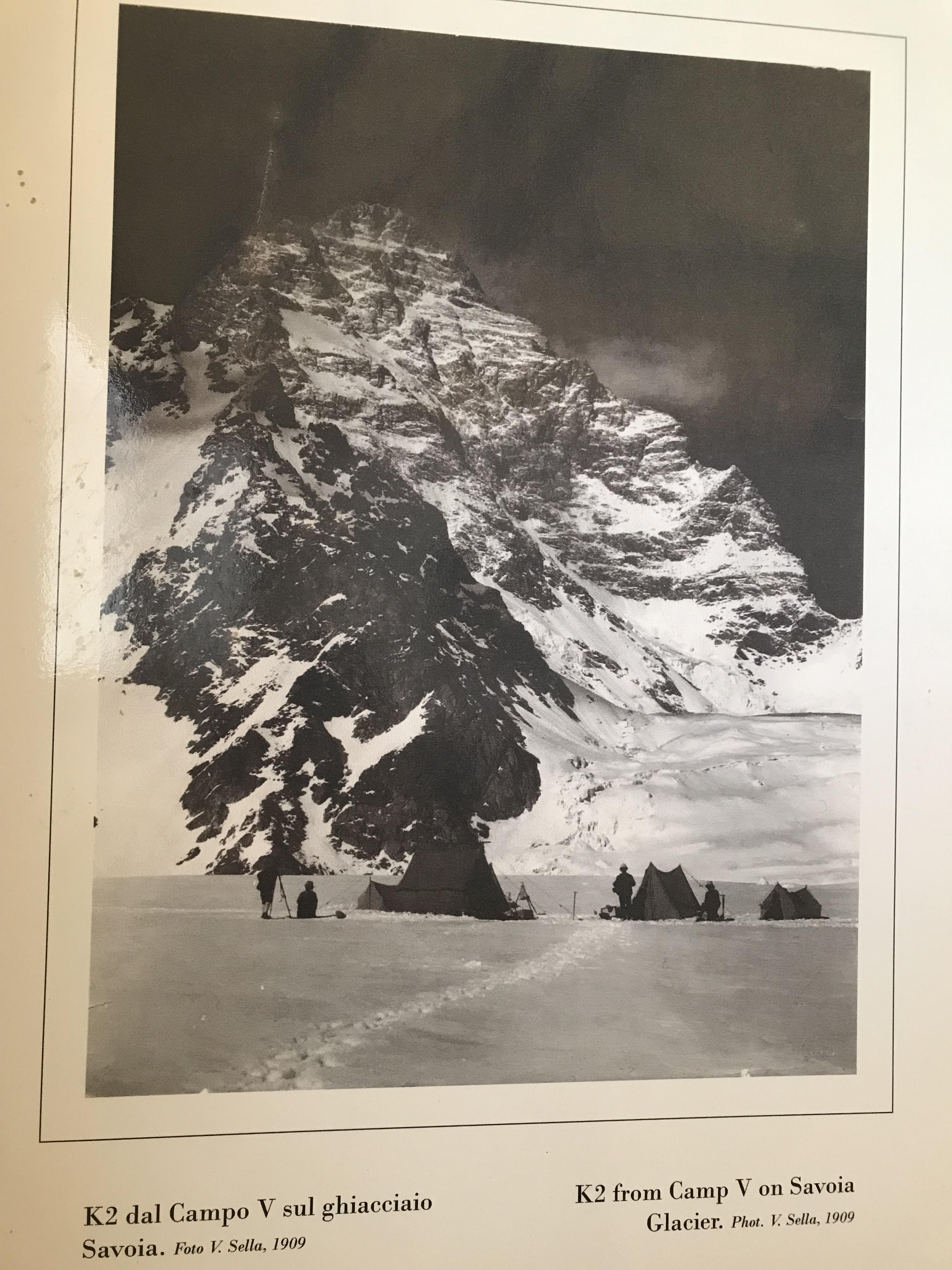
Skardu, perched at 7,310 feet, is best known as a starting point for hikers and climbers, into the heart of the world’s mightiest mountain ranges, the Great Himalaya and the Karakoram. We visited the K2 Museum, which I found to be a highlight, as an avid mountain lover. K2 is the second highest mountain in the world (28,251 feet), located on the Pakistan-China border. Although the summit of Everest is at a higher altitude, K2 is a more difficult and dangerous climb. It’s said that approximately one person dies on the mountain for every four who reach the summit. The summit was first reached by Italian climbers in 1954.
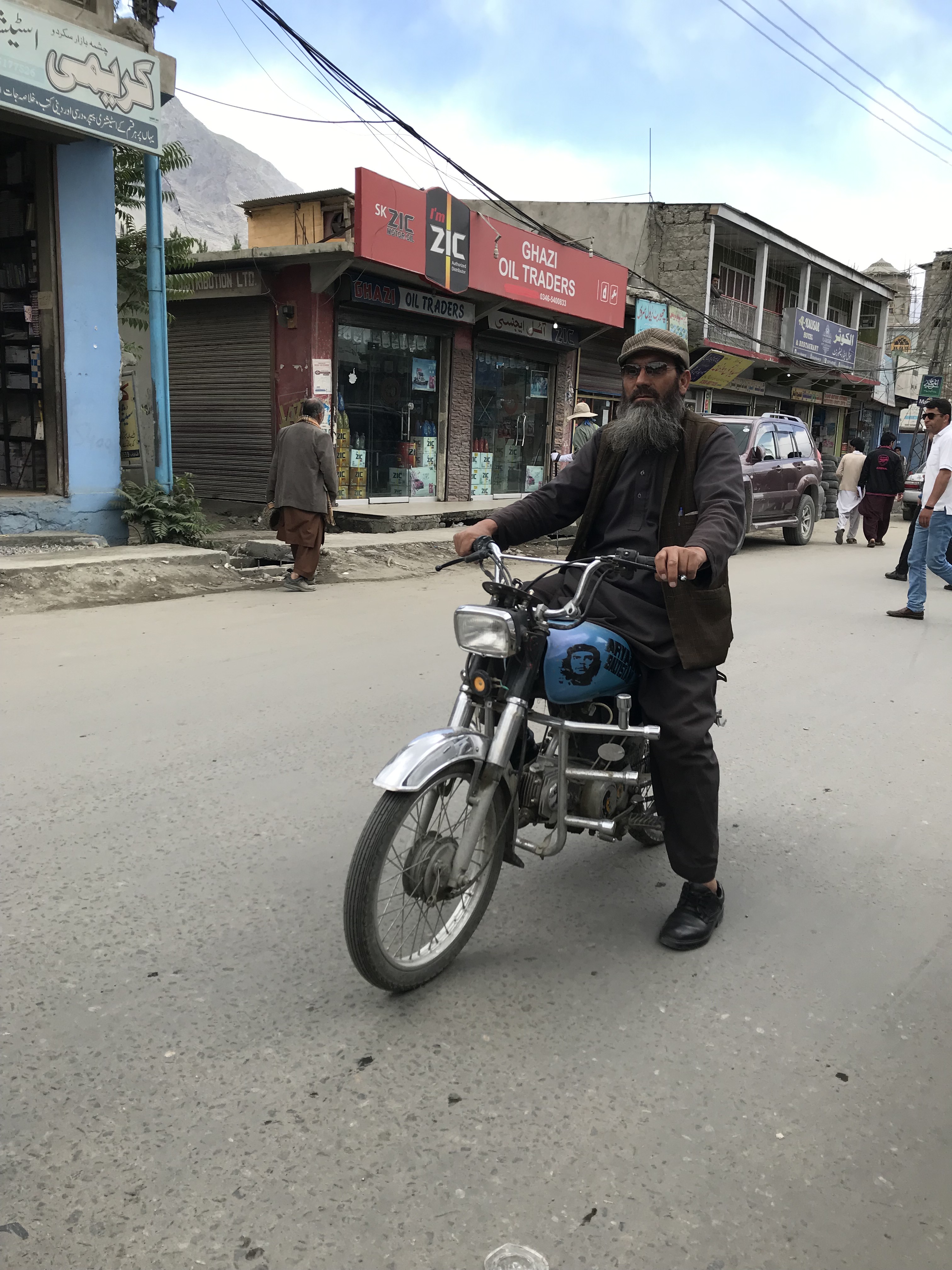
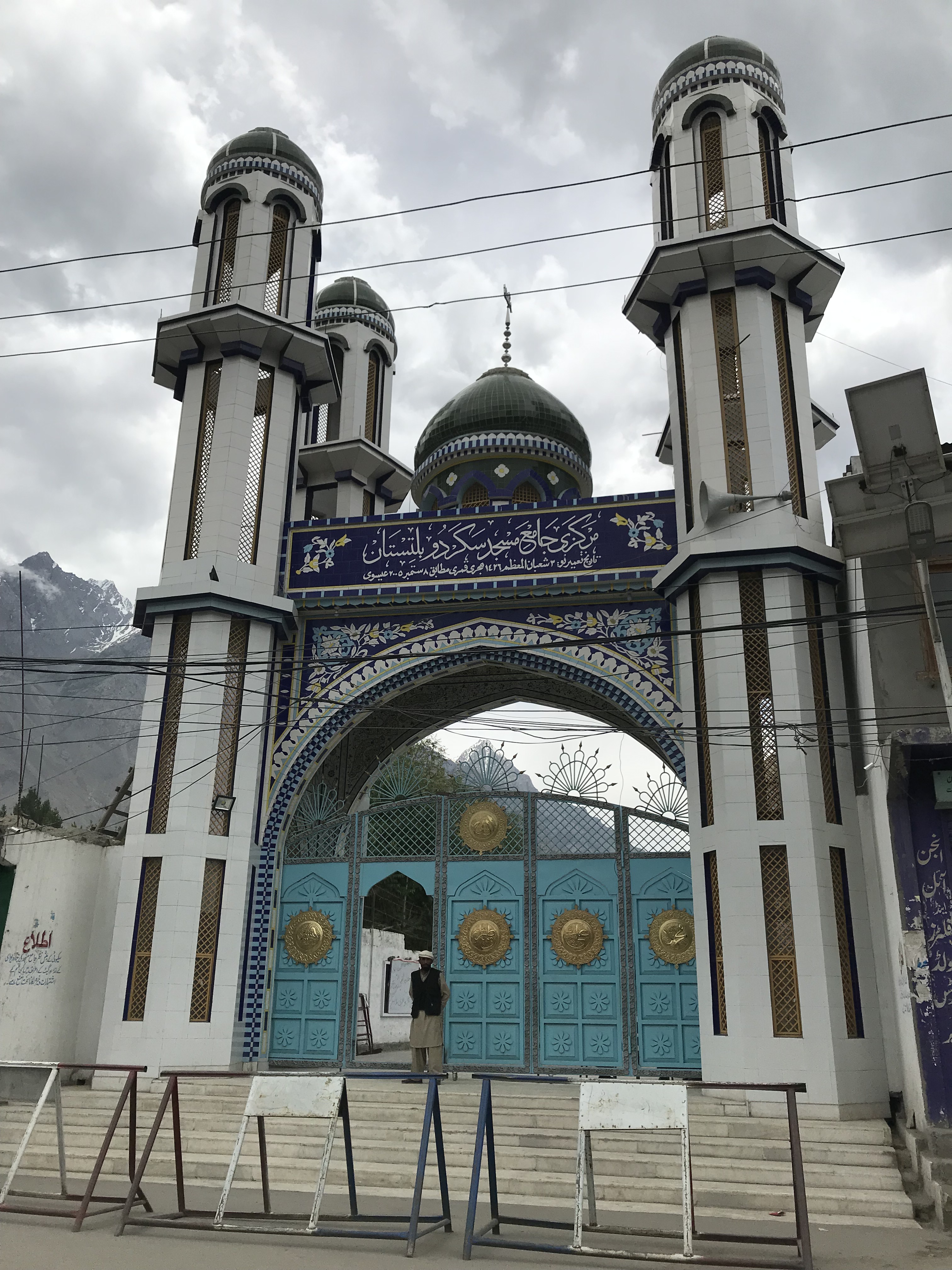
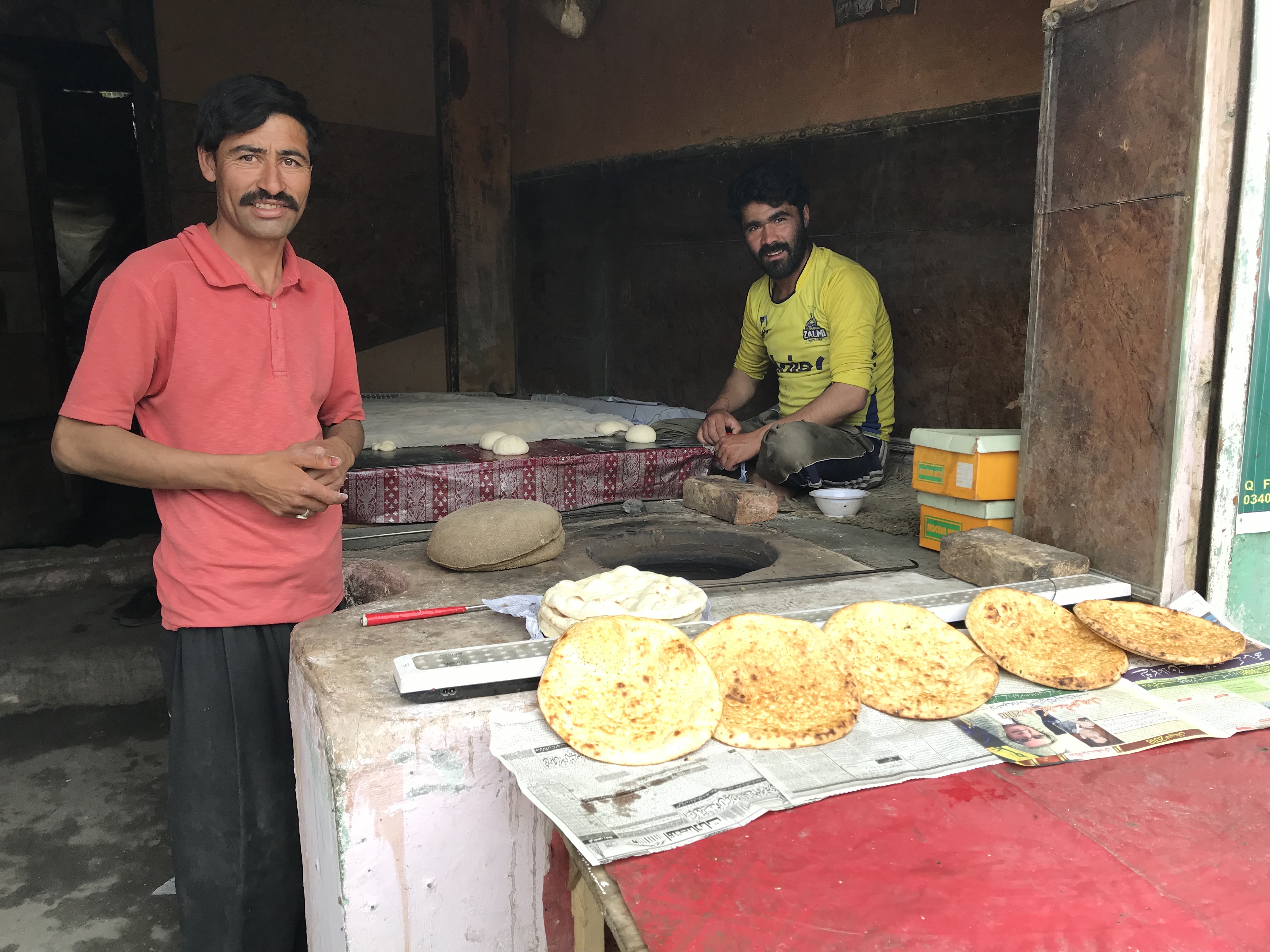
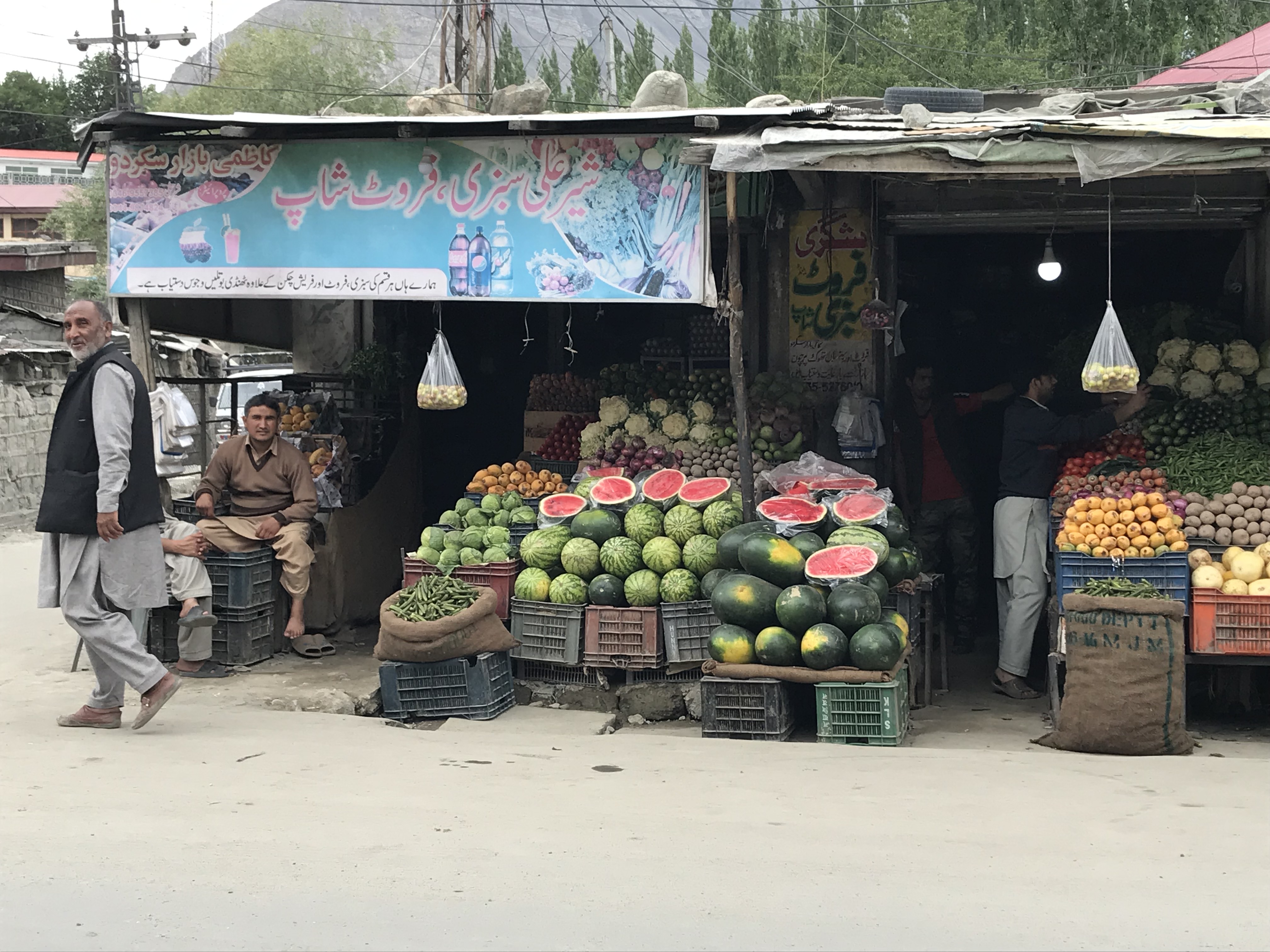
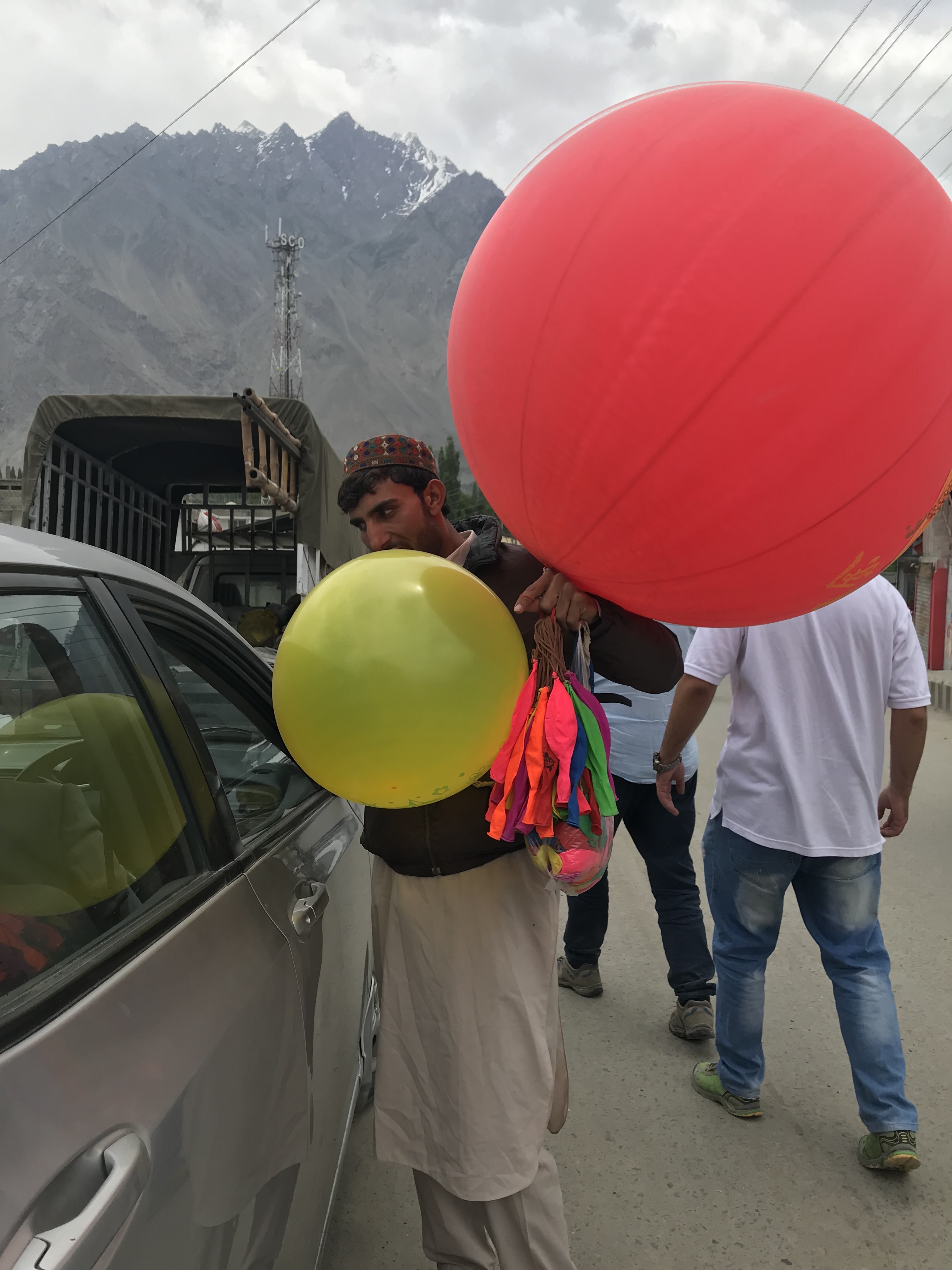
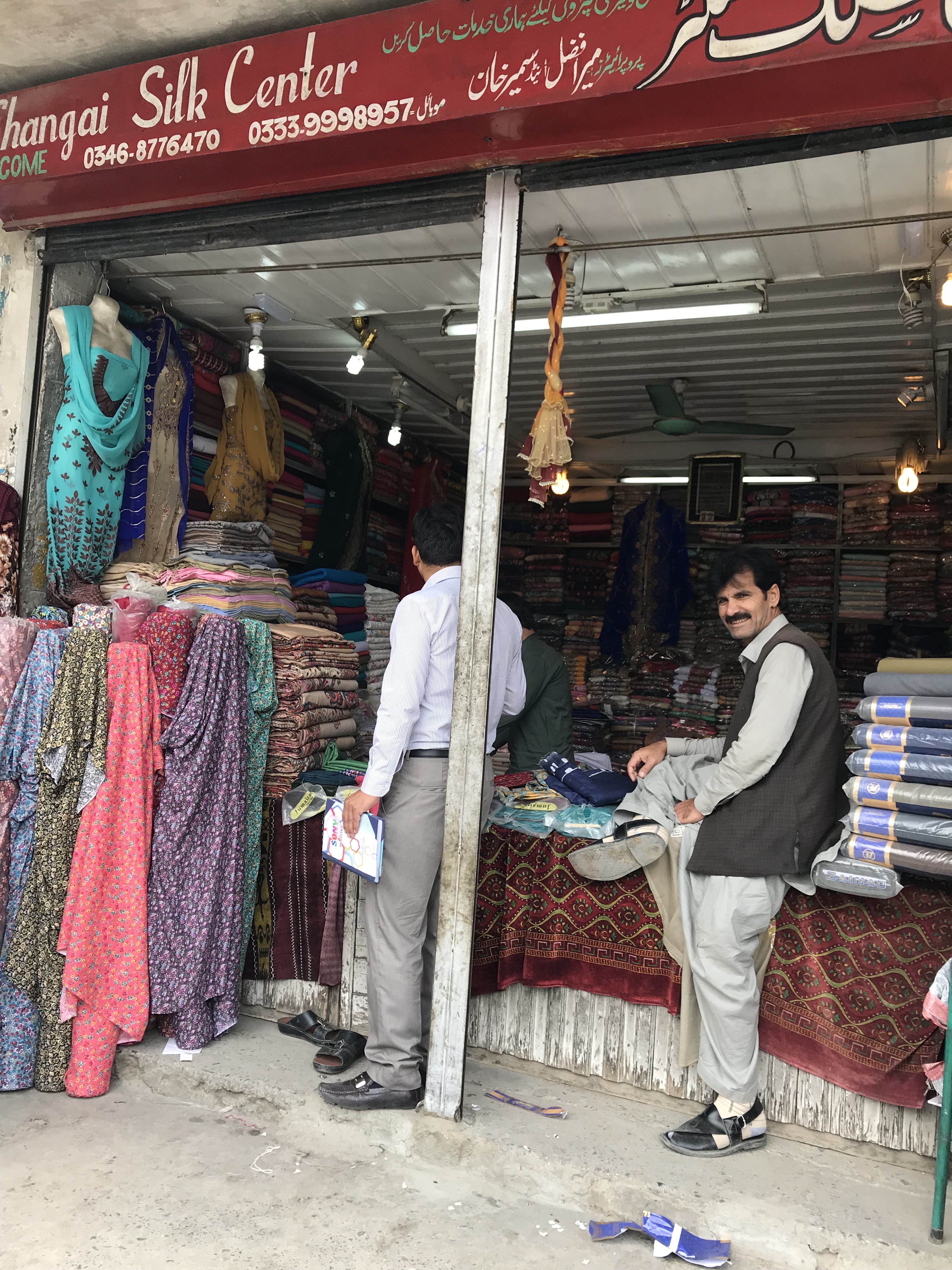
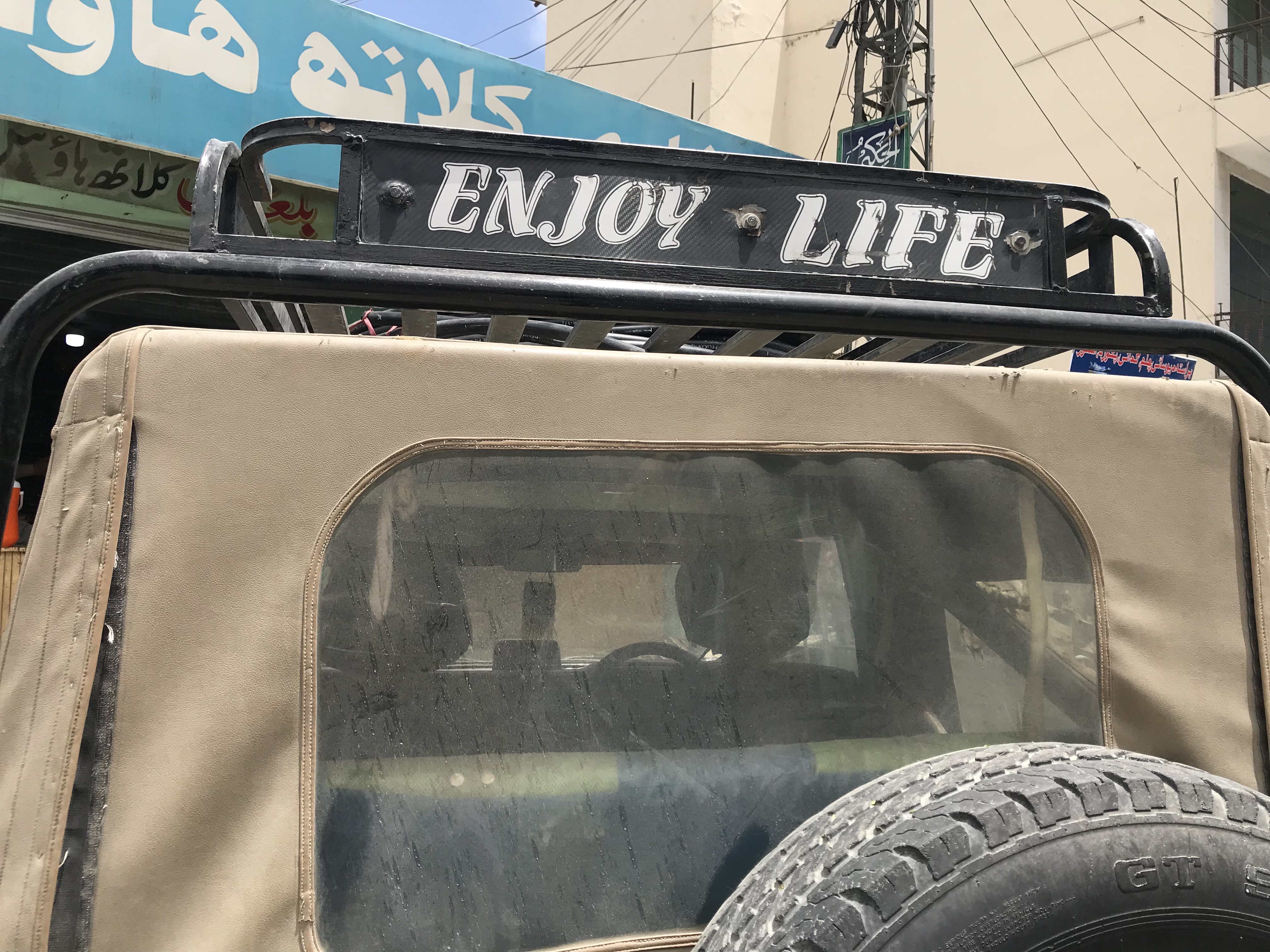
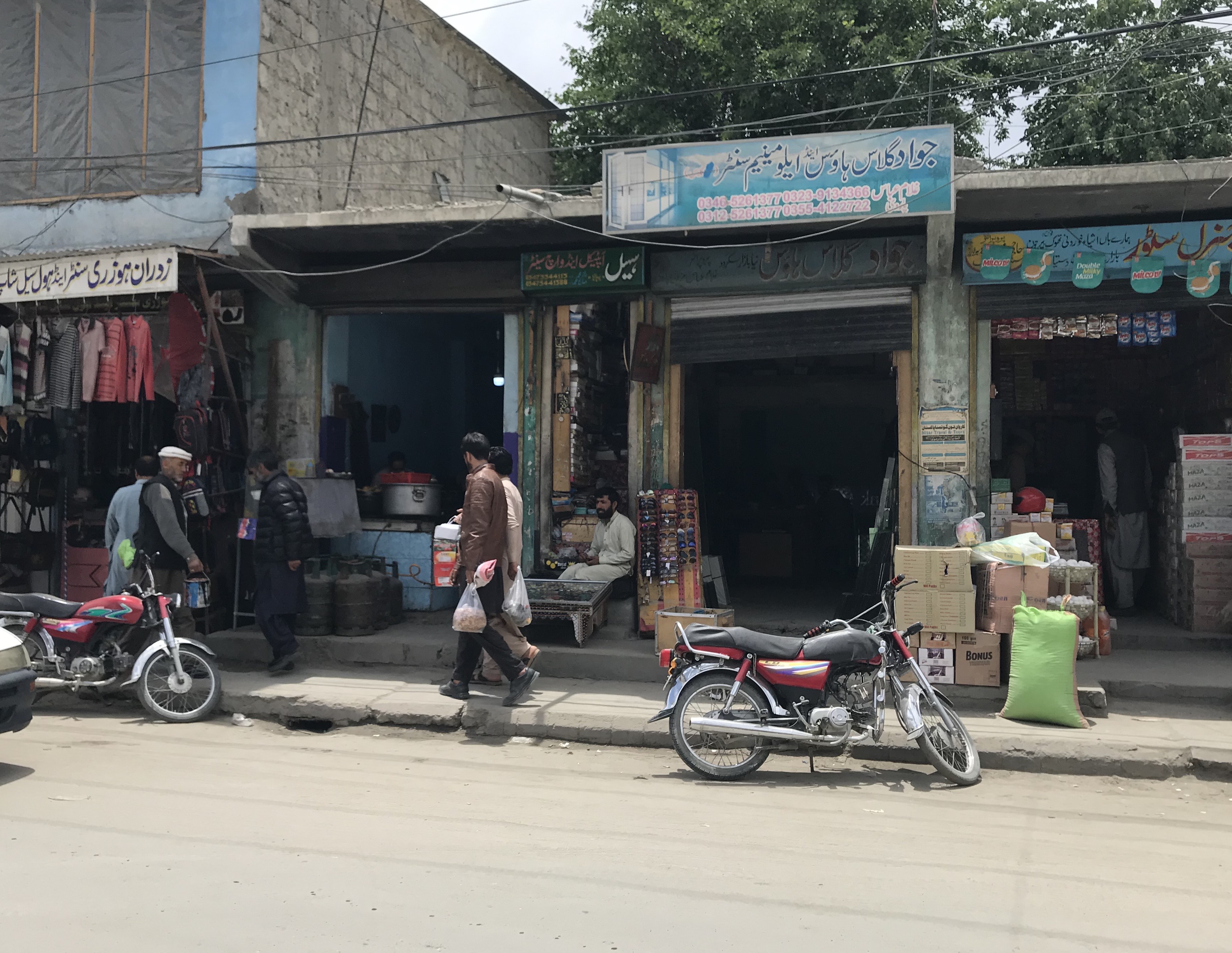
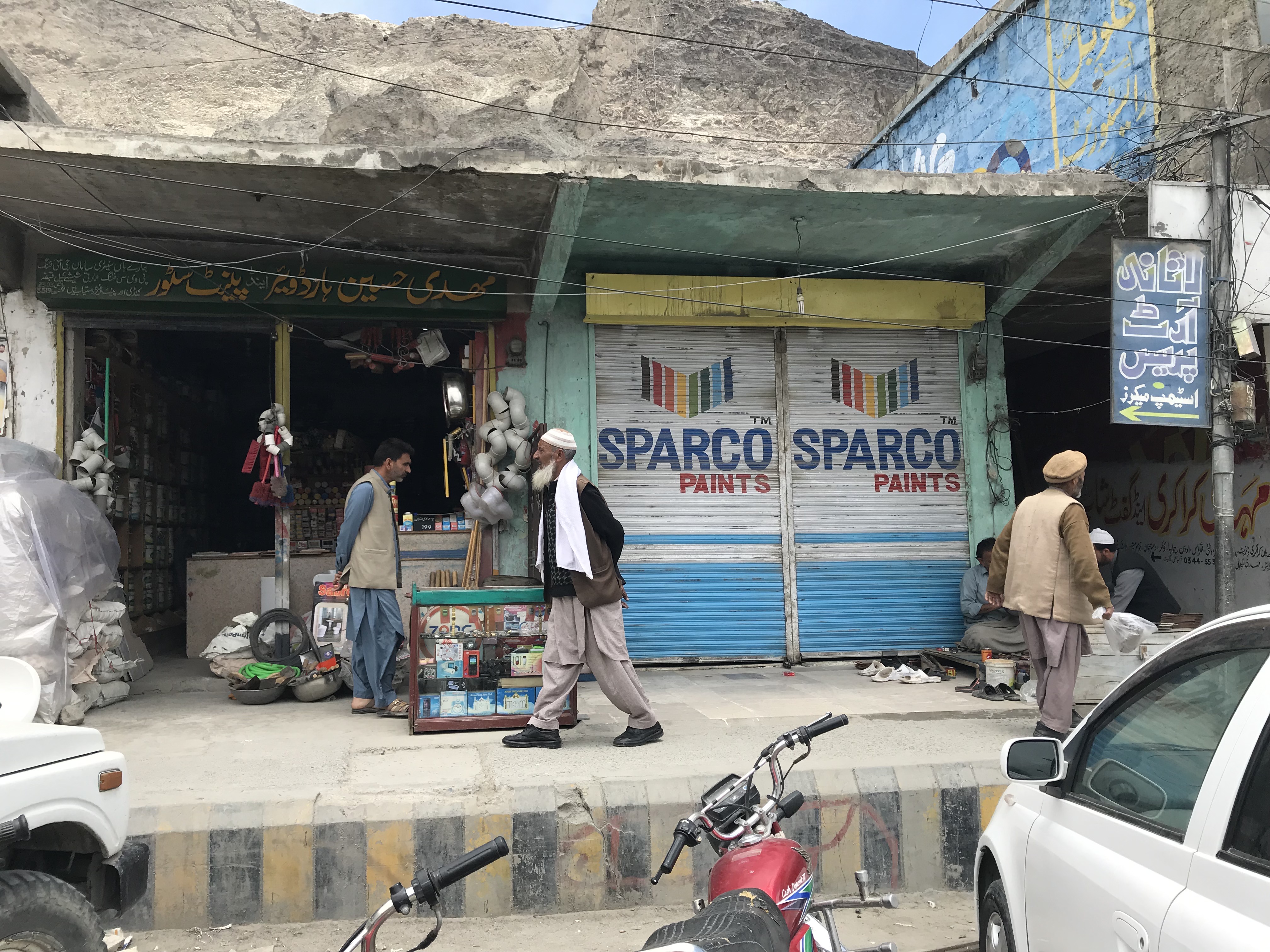
We strolled the Skardu Bazaar before heading east to Khaplu. Our guide bought some freshly baked bread from a local vendor for us to try. It’s always a treat interacting with locals, and especially great if able to help support their businesses. The bread was super tasty, of course.
Onward to Khaplu! As expected, the drive did not disappoint.