Duikar is a small village about 30 minutes from Karimabad, perched on a hilltop about 10,000 feet high. The rightfully named Eagle’s Nest Hotel offers sensational views of surrounding peaks, while enjoying tea from their rooftop terrace. The most notable peak, to us anyhow, was the 19,600 foot rock-spire, Bublimotin, also known as Lady Finger. Clouds would come and go, alternately blocking and exposing our view of its dramatic shape.

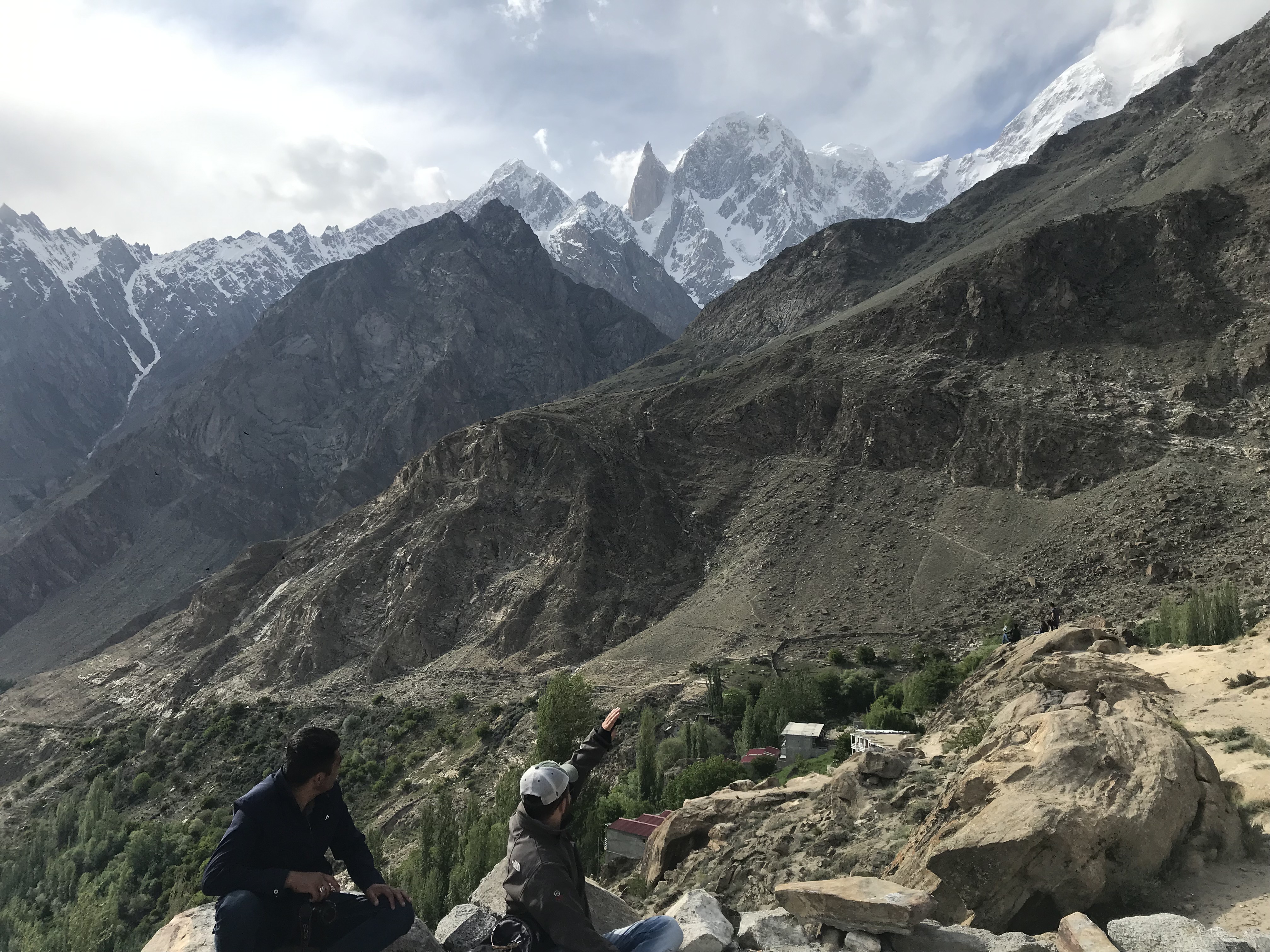
We spent one night in the rustic Eagle’s Nest Hotel, simply to take in a sunset and sunrise, among such stunning views. Sunset was no problem to catch, especially with teatime (also known as cocktail hour, for some) beforehand, and dinner afterward. Sunrise, on the other hand, required a 4:30am wake-up. Challenging, but way worth it. A once in a lifetime sight to behold!
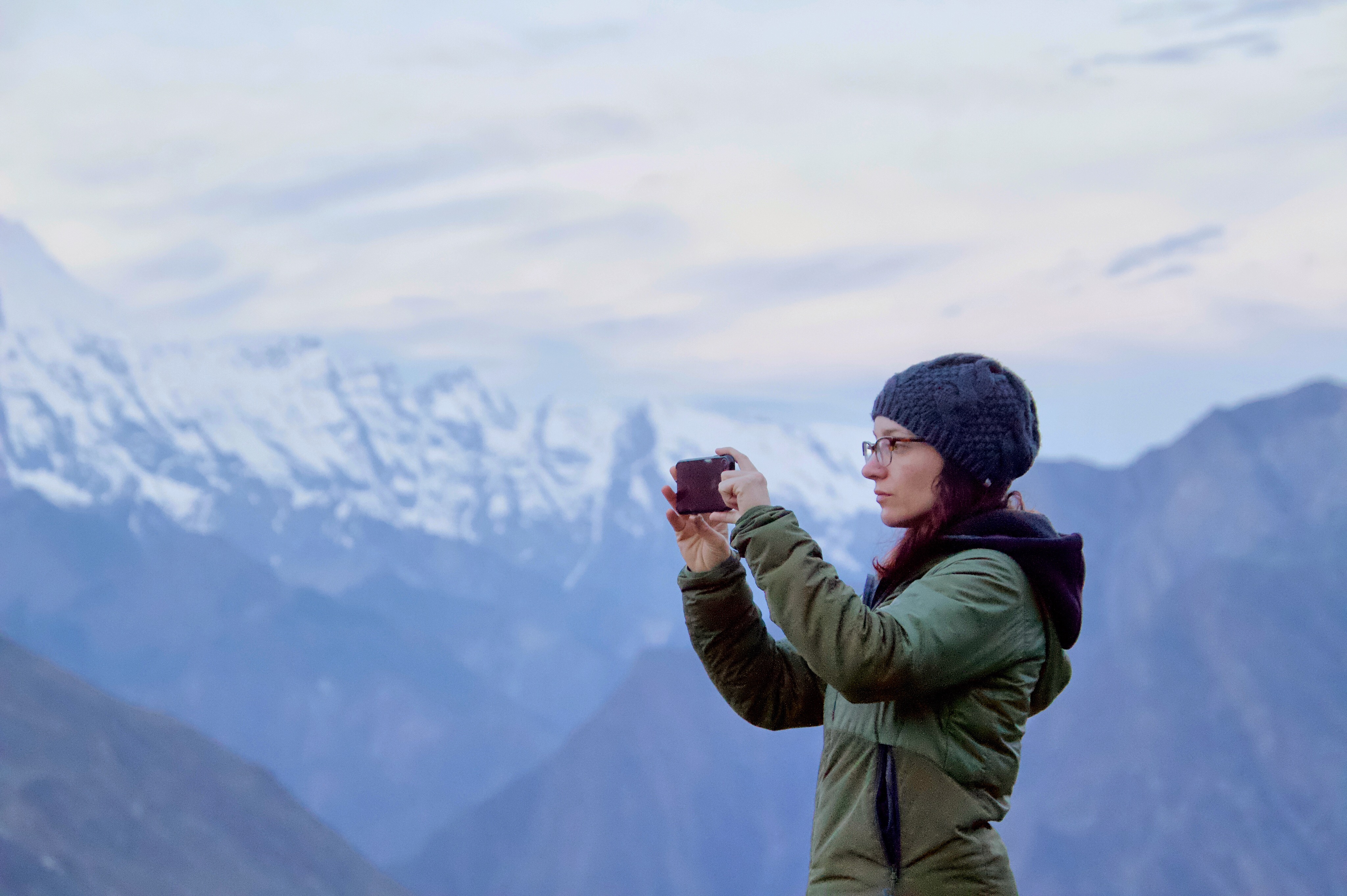
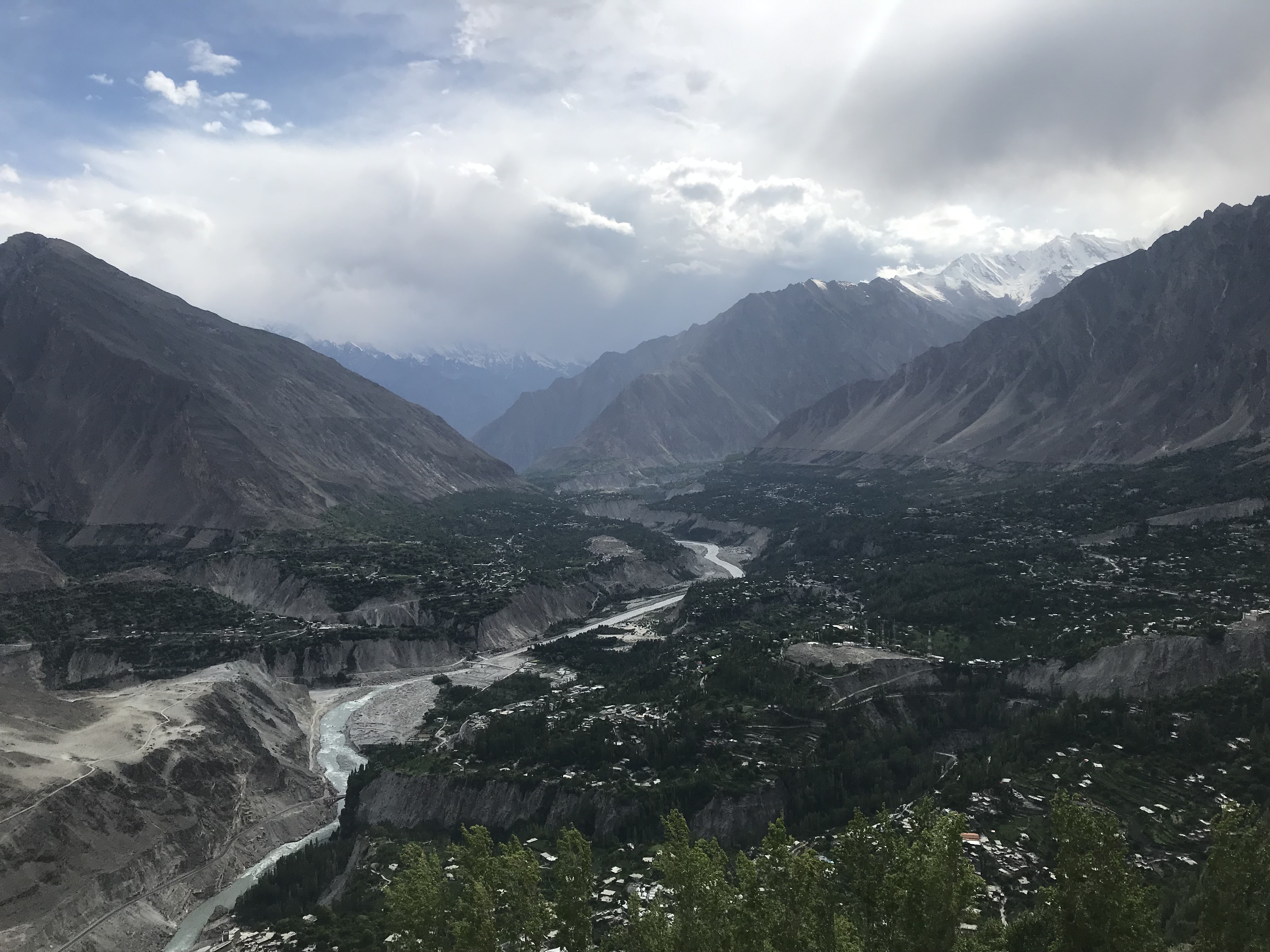
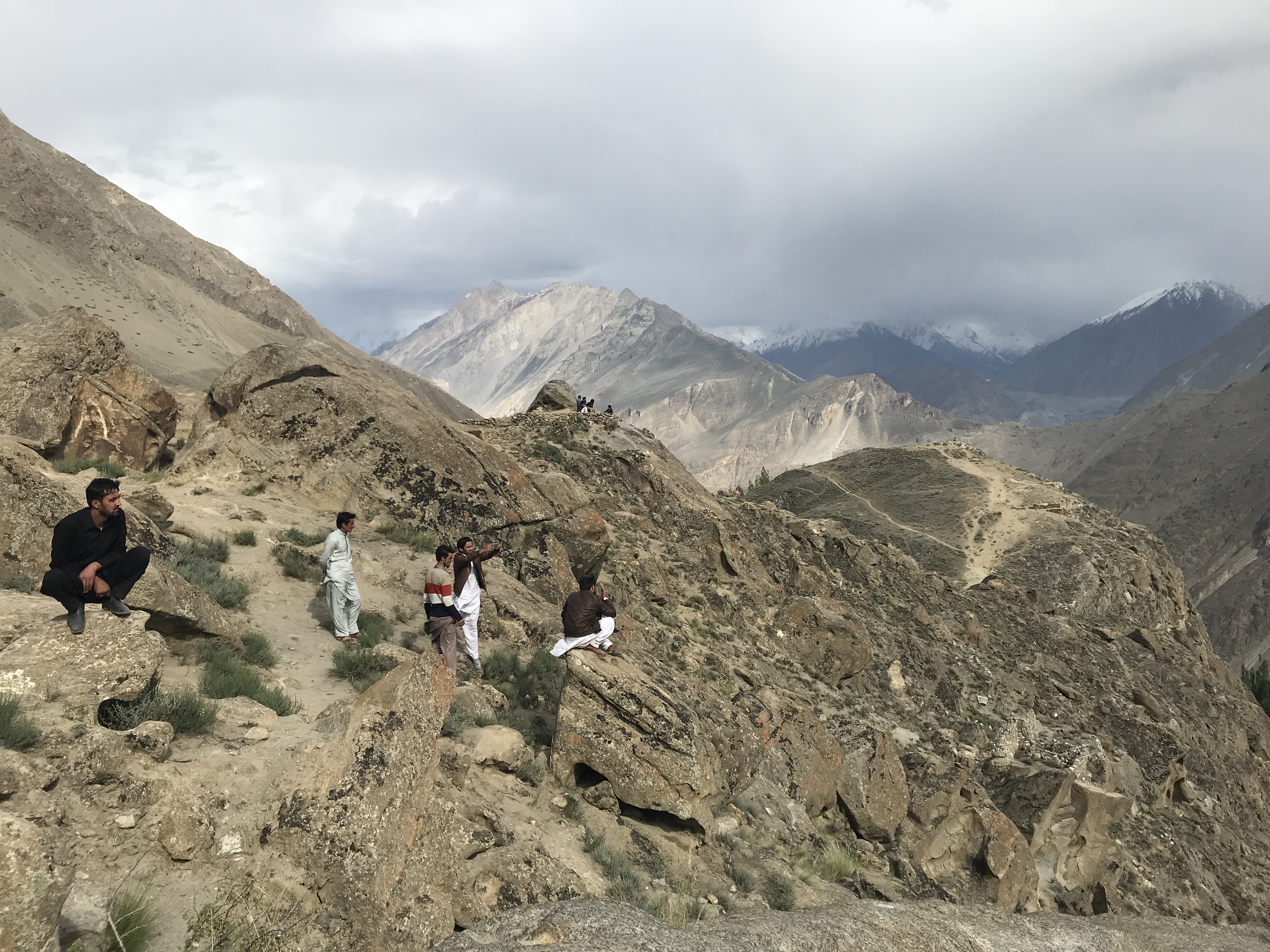
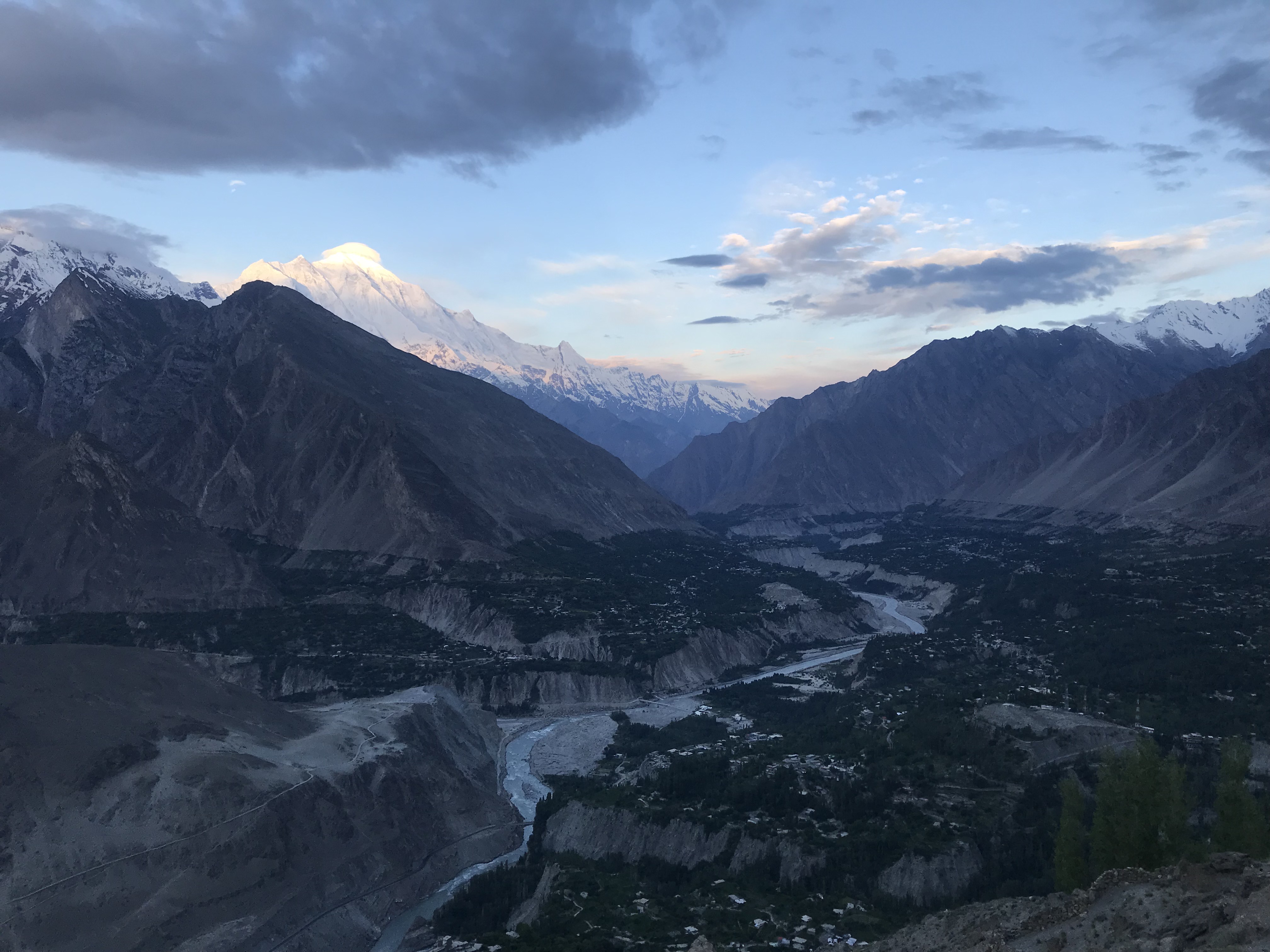
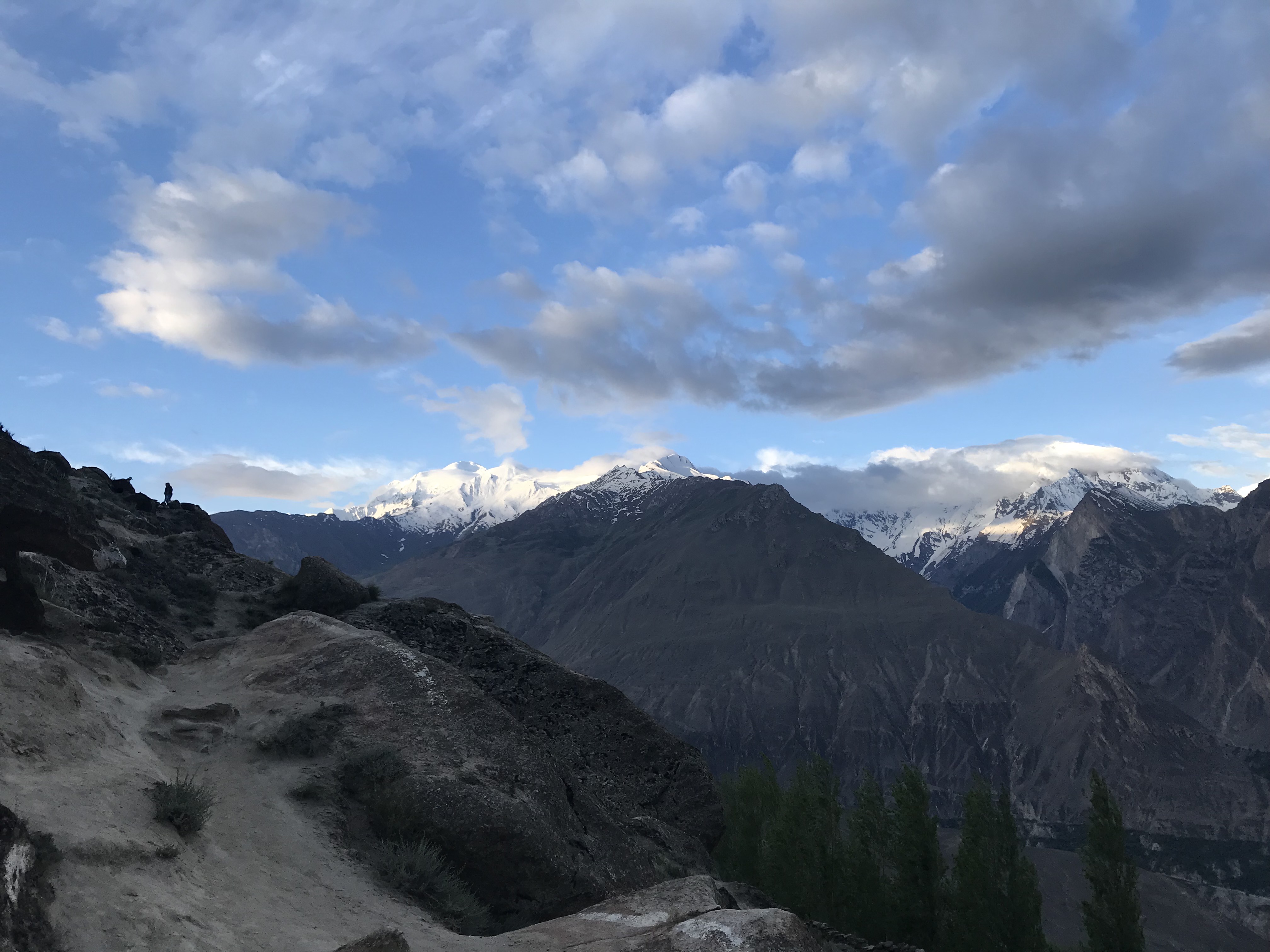
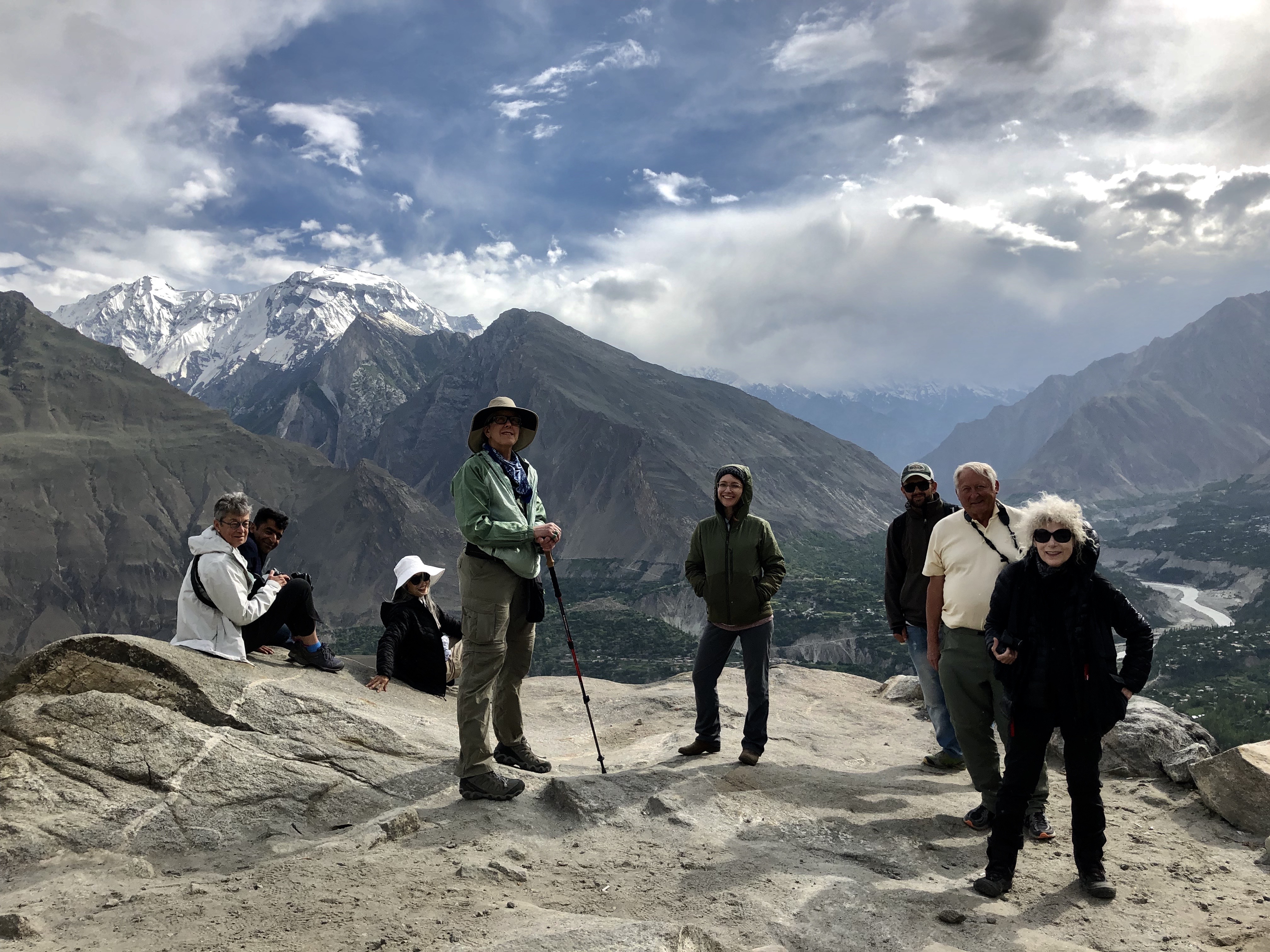
After an amazing sunrise was captured, and a scrumptious breakfast enjoyed at the hotel, we headed onward to Gilgit, the capital city of the Gilgit-Baltistan region. Throughout our time heading down the Karakoram Highway, we had few necessary detours, but that changed the further we ventured. En route to Gilgit, a bridge was washed out, caused by flood waters from a broken glacier. The three hour drive turned into five hours, as we found alternative routes via back-roads weaving through small villages. At one point, cars that were not equipped for such muddy dirt roads got stuck and stopped traffic. Our guides and drivers bravely helped, pushing the cars up the hill in scorching heat. We may have been detoured, but no one was complaining about lack of entertainment.

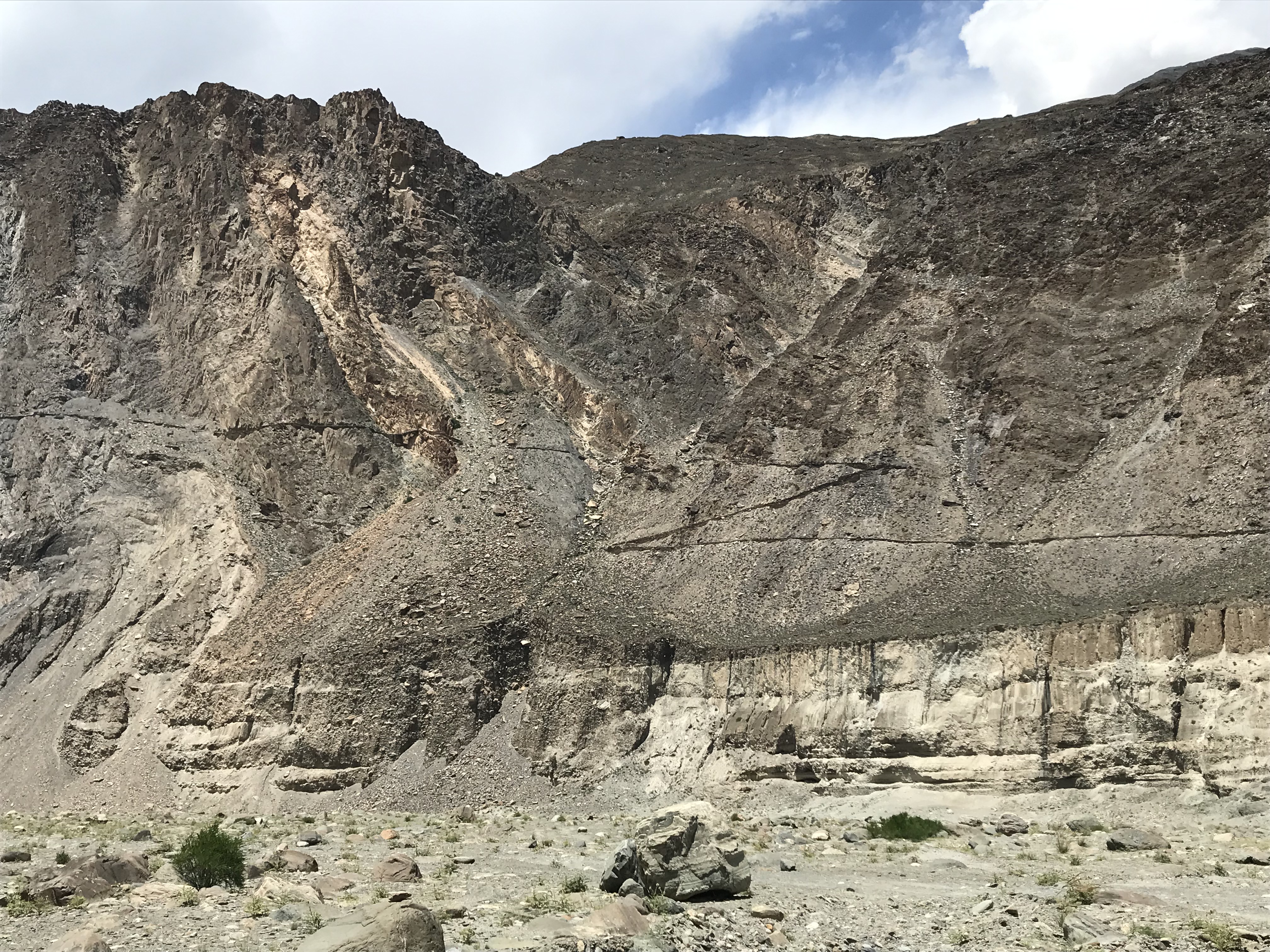
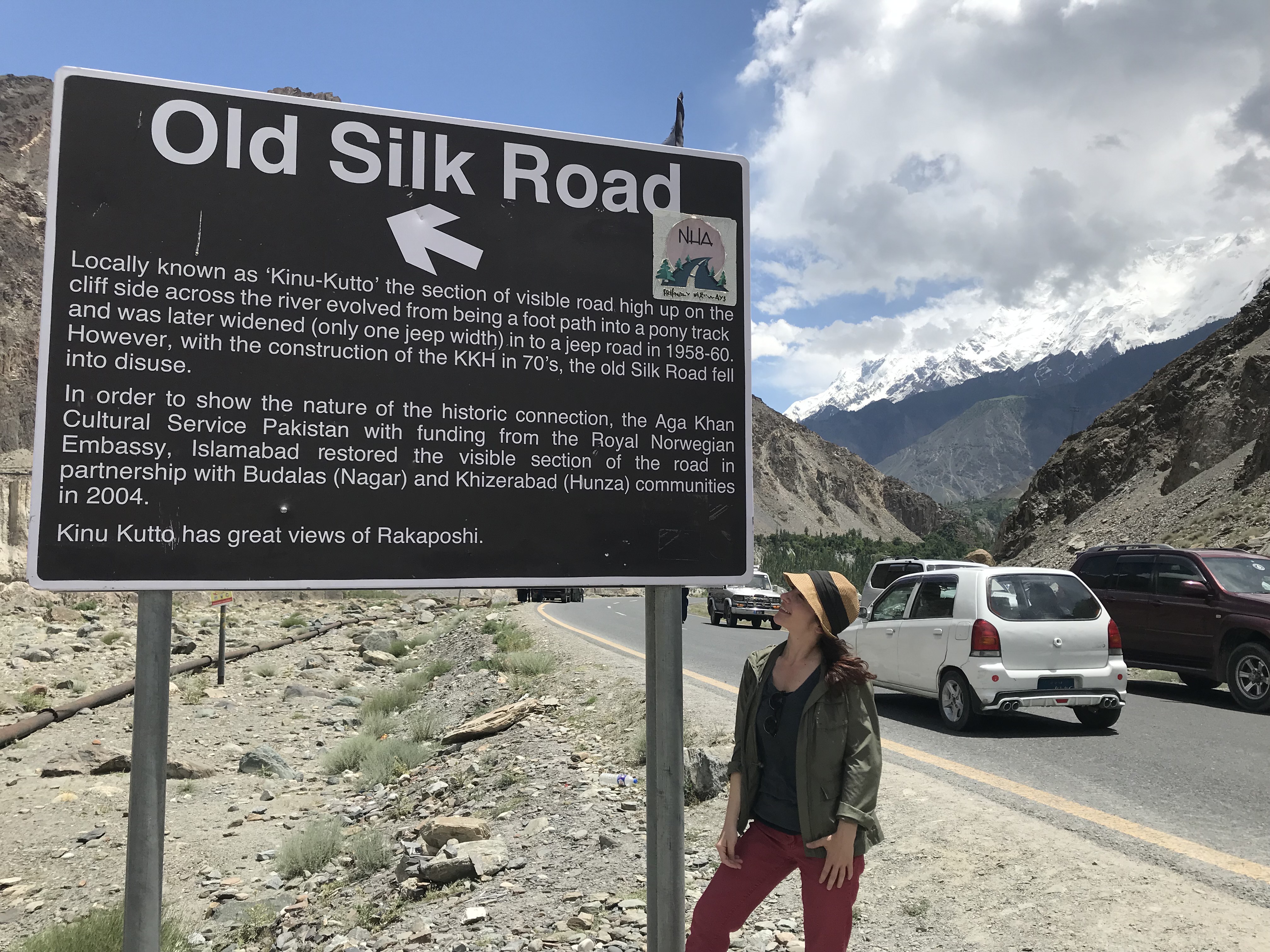
We finally landed back on the main KKH, and were able to see where the ancient Silk Road lined the mountainside across the river. It was surreal to know we were literally following the same path that camel and horseback caravans traveled, for months, in search of new trade opportunities and cultural exchanges. We were also in search of new experiences, but what took us only hours would have taken them weeks to traverse, or possibly more.
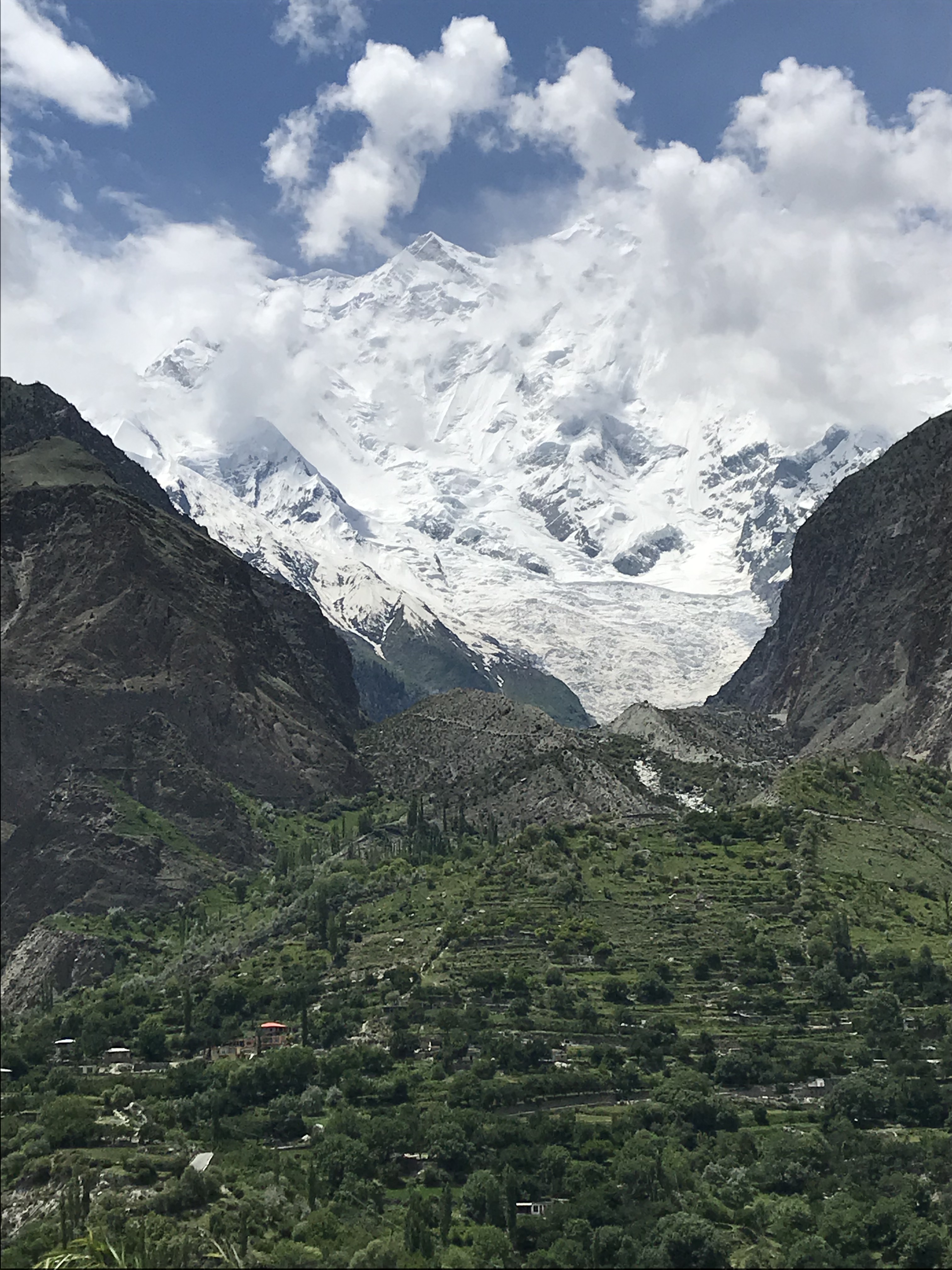
We stopped for tea and a photo opportunity at the Rakaposhi view point. Rakaposhi is listed as the 27th highest mountain in the world, at 25,551 feet. It surely demands attention, towering over terraced hillsides. If the clouds aren’t hiding it, that is.
When we arrived to Gilgit, we quickly checked into the lovely Serena Hotel, before heading out again to see the Kargah Buddha, a 7th century rock carving. The archaeological site is about six miles outside of town. The image of Buddha is about 50 feet tall, carved on a cliff-face, surround by holes that are said to have been for a wooden structure that sheltered it from weather. There are various ancient Buddhist sites and inscriptions all along the KKH, some still intact and some purposely damaged. Buddhism is not often thought of when referencing Pakistan’s history, so we were all quite intrigued to learn about its prominence in the region some 2,300 years ago.

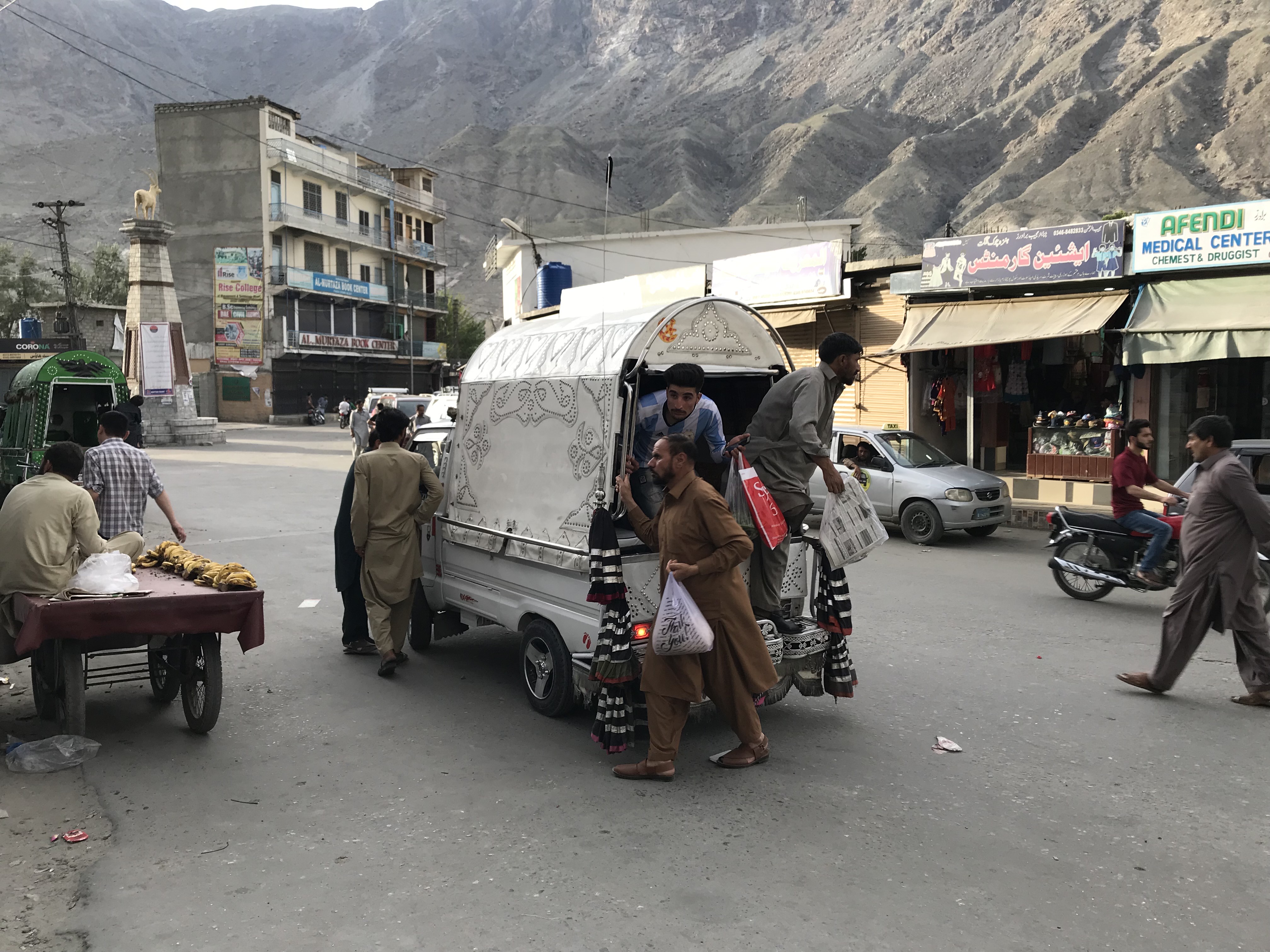
On our way back to the hotel, we stopped in town to stroll the market, also know as the Hunza Chowk. Gilgit was the most bustling town we had yet visited in Pakistan, and all senses were on high alert. My favorite encounter was greeting a nice man working a local coffee shop. He kindly allowed me to snap a picture of him and his photogenic setting. I absolutely love strolling local markets, taking in the sights, sounds, smells, and smiles.

We were only in Gilgit for one night, but I found the heart of Gilgit-Baltistan to be very charming. I hope to spend more time there at a later date.
 Wandering Ways